Wine Category
Bordeaux First Growth: The Definitive Buyer’s Guide to the World’s Most Coveted Wines
Jun
Bordeaux First Growth: The Definitive Buyer’s Guide to the World’s Most Coveted Wines
In 1855, Napoleon III ordered the wines of Bordeaux to be classified for the Paris Exposition Universelle. The committee convened, the merchants consulted, and after considerable deliberation, five estates were placed at the summit of the entire Bordeaux region — designated Premier Cru Classé, or First Growth. They were told they had achieved the highest possible classification. They were also told, implicitly, that this distinction would last forever.
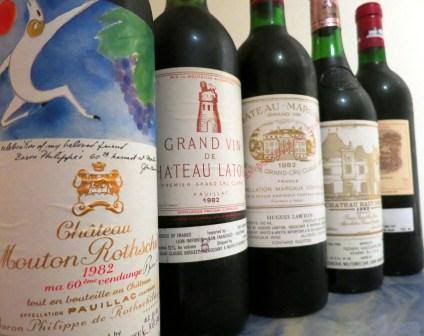
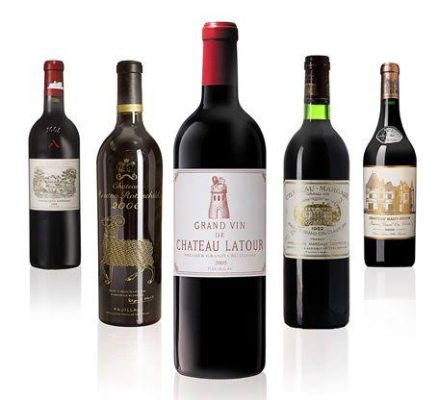
One hundred and seventy years later, those same five estates — Château Lafite Rothschild, Château Latour, Château Margaux, Château Mouton Rothschild, and Château Haut-Brion — remain at the top of the Bordeaux hierarchy. Not through bureaucratic inertia alone. Through consistent, generation-spanning, uncompromising excellence in vineyards that were already old when the classification was drawn up.
Bordeaux First Growth wine is the most coveted category in the fine wine world — and also one of the most misunderstood by buyers approaching it for the first time. The prices are high. The vocabulary is dense. The vintage variation is significant. And the number of people willing to tell you confidently what to buy, when to drink it, and what to pay is inversely proportional to the number of people who actually know.
This guide cuts through all of it. Bordeaux First Growth explained completely, honestly, and practically — so that every decision you make is informed by knowledge rather than brand recognition alone.
What Bordeaux First Growth Actually Means: The 1855 Classification
The term Bordeaux First Growth is not a marketing designation. It is a legally defined classification — the oldest and most famous quality hierarchy in the wine world, established in 1855 and modified only once in its entire history.
First Growths — Lafite, Latour, Margaux, Haut-Brion, and Mouton — are the top tier of the 1855 Bordeaux Classification. They command the highest prices and the longest ageing potential of any classified Bordeaux estate. The original 1855 classification listed four First Growths: Lafite, Latour, Margaux, and Haut-Brion. Mouton Rothschild was classified as a Second Growth in 1855 — a status it spent over a century campaigning against, with Philippe de Rothschild famously declaring “Premier ne puis, Second ne daigne, Mouton suis” (First I cannot be, Second I do not deign to be, Mouton I am). In 1973, after decades of lobbying and consistently exceptional quality, Mouton Rothschild was elevated to Bordeaux First Growth — the only change ever made to the 1855 Classification. The Rum Lab
Each of the five Bordeaux First Growth estates occupies its own terroir, produces its own signature style, and commands its own collector following. Understanding the differences between them is the single most important piece of knowledge any buyer approaching this category needs.
Explore our complete Fine Wine Bordeaux collection at Noir Cellars → for currently available First Growth and Right Bank expressions.
The Five Bordeaux First Growth Estates: A Complete Character Guide
Château Lafite Rothschild — Pauillac’s Most Aristocratic Expression
Château Lafite Rothschild has been producing Bordeaux First Growth wine from its Pauillac estate since the 17th century. Château Lafite Rothschild is renowned for its finesse and elegance — a Bordeaux First Growth that prioritises aromatic complexity and silky precision over raw power. The estate’s 103 hectares of vines, sitting on deep gravel over limestone subsoil, produce a Cabernet Sauvignon-dominated wine of extraordinary delicacy — pencil shavings, violets, blackcurrant, and cedar, wrapped in tannins of remarkable fineness. GlobeNewswire
At its greatest — 2016, 2010, 2000, 1996, 1982 — Château Lafite Rothschild produces Bordeaux First Growth wine of near-mythological status. The 1869 Lafite sold for $232,692 at a 2010 Sotheby’s auction, establishing it as one of the most valuable bottles ever sold at the time. The 2025 vintage showed a wine of real authority at barrel sample — concentrated dark fruit, structured tannins, and the precision and freshness that Pauillac produces in its greatest years. Statista
Current market price: $800–$1,200 per bottle depending on vintage
Best recent vintages: 2016, 2010, 2009, 2005, 2000
Drinking window (2016): 2028–2055
Buy Château Lafite Rothschild at Noir Cellars →
Château Latour — The Most Powerful Bordeaux First Growth
If Lafite is the aristocrat of Bordeaux First Growth, Latour is the monument. Château Latour is revered for its power and structure — a Bordeaux First Growth of extraordinary density and longevity that consistently produces the longest-lived wines of any classified Bordeaux estate. GlobeNewswire
The tower referenced in the estate’s name still stands at the heart of the 47-hectare Grand Enclos — the core Bordeaux First Growth vineyard block of deep Günzian gravel over clay and limestone, producing Pauillac of uncompromising structural intensity. Left Bank wines like Château Latour evolve slowly and reward patience — a Bordeaux First Growth built for the patient collector rather than the immediate drinker. The 2010 Latour, considered by many critics the greatest Bordeaux of the decade, is recommended for drinking from 2030 at the earliest and will be evolving magnificently in 2060. The Rum Lab
In 2012, Château Latour made the landmark decision to withdraw completely from the en primeur system — releasing wines only when the estate considers them ready to drink. This decision reflected both a statement of winemaking confidence and a commercial strategy to capture more of the secondary market premium themselves. It means that Latour releases are now significantly rarer on the primary market than other Bordeaux First Growth estates.
Current market price: $900–$1,400 per bottle depending on vintage
Best recent vintages: 2010, 2016, 2009, 2005, 2000
Drinking window (2016): 2030–2060
Buy Château Latour at Noir Cellars →
Château Margaux — The Most Elegant Bordeaux First Growth
Château Margaux is celebrated for its aromatic complexity and balance — the most stylish, charming, and sophisticated of the five Bordeaux First Growth estates. Where Latour delivers power and Lafite delivers refinement, Margaux delivers something harder to define and more immediately seductive: a combination of aromatic intensity and textural elegance that the Margaux appellation’s uniquely thin, gravelly soils produce in a way that no other Pauillac or Saint-Julien terroir replicates. GlobeNewswire
The Château Margaux 2016 — our most recently profiled Bordeaux First Growth expression — earned 98 points from Decanter’s Jane Anson and a perfect 100 from James Suckling, with critics unanimously describing a wine of crystalline precision, extraordinary aromatic complexity, and a finish measured not in seconds but in minutes.
For the complete tasting notes, price guide, and investment case for this specific expression, read our dedicated Château Margaux 2016 guide →.
Current market price: $900–$1,200 per bottle (2016 vintage)
Best recent vintages: 2016, 2015, 2010, 2005, 2000
Drinking window (2016): 2027–2050
Buy Château Margaux at Noir Cellars →
Château Haut-Brion — The Outsider That Outclasses Everyone
Château Haut-Brion is the anomaly of the Bordeaux First Growth classification — the only estate outside the Médoc to be included in 1855, sitting not on the gravelly plateau of Pauillac or Margaux but in Pessac-Léognan on the outskirts of the city of Bordeaux itself.
Château Haut-Brion is distinguished by its historic significance and innovation — a Bordeaux First Growth with a character unlike any of its four peers, shaped by the distinctly different gravelly soils and urban microclimate of Pessac-Léognan. Where the Médoc First Growths are driven by blackcurrant, cedar, and graphite, Haut-Brion has a more earthy, smoky, almost truffled quality — a combination of savoury earthiness and dark fruit that the estate’s iron-rich gravel uniquely produces. GlobeNewswire
Historically, Château Haut-Brion has the lowest price point among the Bordeaux First Growth estates — selling at around $600 per bottle in many vintages. This represents arguably the finest value proposition in the entire Bordeaux First Growth category. Collectors who understand the quality consistently choose Haut-Brion as the most rewarding First Growth to own at current market pricing. IWSR
Haut-Brion also produces a rare and extraordinary white wine — Château Haut-Brion Blanc — from Sauvignon Blanc and Sémillon, considered by many critics the greatest white wine of Bordeaux and one of the greatest dry white wines produced anywhere on earth.
Current market price: $550–$750 per bottle depending on vintage
Best recent vintages: 2015, 2016, 2010, 2009, 2005
Drinking window (2015): 2025–2050
Buy Château Haut-Brion at Noir Cellars →
Château Mouton Rothschild — The Artistic Bordeaux First Growth
Mouton Rothschild is the most theatrical of the five Bordeaux First Growth estates — the one where art, culture, and wine have been most deliberately woven together as a unified expression of luxury. Château Mouton Rothschild is known for its opulence and artistic labels — each vintage’s label designed by a different artist, including Picasso, Miró, Dalí, Francis Bacon, and Jeff Koons. GlobeNewswire
The labels are collector objects. The wine is more important. Mouton Rothschild produces Bordeaux First Growth of extraordinary aromatic richness — more baroque, more extravagant than Lafite’s restrained precision, more fruit-forward and hedonistic than Latour’s structural austerity. The best Mouton vintages — 1982, 1986, 2009, 2010, 2016 — are among the most compelling First Growth drinking experiences available.
The artistic label series has created a secondary market for complete vintage sets that extends beyond the wine itself — complete Mouton Rothschild label series from consecutive decades command premiums at auction that reflect both wine and art market dynamics simultaneously.
Current market price: $750–$1,100 per bottle depending on vintage
Best recent vintages: 2016, 2010, 2009, 2005, 2000
Drinking window (2016): 2028–2055
Buy Château Mouton Rothschild at Noir Cellars →
The Bordeaux First Growth Price Guide: What to Expect in 2025/2026
Understanding Bordeaux First Growth pricing requires distinguishing between the primary market (current releases), the secondary market (back vintages on resale), and the en primeur market (futures purchased before release). Each operates on different price logic.
Primary market pricing (current releases):
The best vintages for Bordeaux First Growth include 1945, 1961, 1982, 1990, 1996, 2000, 2005, 2009, 2010, 2015, 2016, and 2022. At the accessible end of the First Growth scale, Château Haut-Brion has the lowest price point among the five estates, selling at around $600 per bottle in many vintages. IWSR
| Estate | Current Vintage | Price per Bottle | Best Available Format |
|---|---|---|---|
| Château Haut-Brion | 2019 | From $650 | 750ml, Magnum |
| Château Margaux | 2016, 2019 | From $950 | 750ml, OWC 6-bottle |
| Château Lafite Rothschild | 2018, 2019 | From $980 | 750ml, Magnum |
| Château Mouton Rothschild | 2018, 2019 | From $900 | 750ml, OWC 6-bottle |
| Château Latour | 2012, 2015 | From $1,100 | 750ml (limited) |
Secondary market back vintages:
The most investment-grade back vintages currently available — 2010, 2016, 2009, 2005 — command significant premiums over current release pricing. Bordeaux First Growth 2010 expressions are now trading at $1,200–$2,500 per bottle depending on estate and condition. The 2005 vintage, still considered one of the finest of the modern era, trades from $1,500 for the most desirable estates.
En primeur (futures):
En primeur offers three specific advantages for buyers of Bordeaux First Growth wine. First, access — the most sought-after châteaux sell out en primeur and rarely appear on the secondary market at release prices. Second, price — en primeur prices are typically set before the market has fully formed its view, meaning genuine value can exist in great vintages. Third, investment — for collectors, the finest Bordeaux First Growth consistently appreciates in value once released and reviewed by the major critics. Statista
For en primeur enquiries on the 2025 vintage — which early reports describe as a vintage of elegant power — contact our concierge team at concierge@noircellars.com. Access our fine wine investment guide → for full portfolio context.
The Best Bordeaux First Growth Vintages to Buy Right Now
Knowing which estates to prioritise is only half the equation. Knowing which vintages to target — at current market prices — is equally critical.
Some of the best Bordeaux First Growth vintages with high wine critic scores and strong investment potential are 2000, 2005, 2009, 2010, and 2016. Here is the current assessment: The Rum Lab
2016 — The Immediate Target
The finest Left Bank vintage since 2010 by most critical accounts. Bordeaux First Growth 2016 from every estate earned scores of 97–100 from the major critics. Prices have settled from initial en primeur highs into a more stable trading range — representing genuinely attractive entry points given the quality. The drinking window of 2027–2055 means buyers acquiring now are still ahead of peak demand.
Read our dedicated Château Margaux 2016 guide → for the most detailed First Growth vintage analysis currently on the Noir Cellars blog.
2019 — The Modern Classic at Value
2019 in particular is being called a modern classic at a fraction of 2010 prices — combining freshness with structure and available at excellent price points compared to older benchmark vintages. Bordeaux First Growth 2019 expressions represent the best current-market value in the category — all five châteaux produced wines of 96–99 point quality at prices significantly below 2016 and 2010 equivalents. The Rum Lab
2010 — The Monument
The most structurally powerful and age-worthy of the modern Bordeaux First Growth vintages. Drinking windows extend to 2050–2070 for the finest estates. Now fully into secondary market territory, prices reflect both the quality consensus and diminishing supply as collectors open bottles. The finest investment vintage in the category.
2015 — The Generous Giant
Rich, opulent, immediately seductive — the 2015 Bordeaux First Growth expressions are the most accessible of the landmark modern vintages. Opening windows from 2025 onward make them the most practical choice for buyers who want to drink in the near to medium term. Latour, Margaux, and Haut-Brion 2015 are all outstanding.
2022 — The En Primeur Opportunity
2022 is listed among the best Bordeaux First Growth vintages in current en primeur availability — a warm, concentrated vintage that has earned consistently high critical scores. Prices remain at en primeur or near-en primeur levels, representing the best forward-buying opportunity for patient investors. Statista
Browse all available Bordeaux First Growth vintages at noircellars.com/fine-wine/bordeaux → or read our fine wine investment guide → for portfolio guidance.
Bordeaux First Growth as Investment: The Complete Case
The investment case for Bordeaux First Growth is the most extensively documented in all of fine wine — and the data consistently supports it.
Bordeaux wine has historically been collected by noble families across Europe and has always been seen as a symbol of luxury. The Bordeaux wine region is divided into Left and Right Bank. Since Left Bank Bordeaux First Growth wines have longer ageing potential, they are also priced higher. With time, the value of these wines increases even more, making them outstanding long-term investment opportunities. The vineyard lands closest to the rivers have superior terroir and are valued much higher — up to $2 million per hectare — and the wines made there command investment premiums that reflect this land value directly. The Rum Lab
The secondary market for Bordeaux First Growth wine is the deepest and most liquid in all of fine wine. Liv-ex — the global fine wine exchange — consistently shows First Growth Bordeaux as the most actively traded wines on its platform, meaning that buyers can exit positions more readily than in almost any other fine wine category.
Top Bordeaux First Growth has a strong track record as an appreciating asset. Look for original wooden cases, documented storage history, and purchase from reputable sources — these three factors are the primary determinants of secondary market value for Bordeaux First Growth wine. The Rum Lab
For collectors building a Bordeaux First Growth portfolio, the key principles are:
Diversify across estates. No single First Growth outperforms consistently across all vintages. A portfolio spanning all five estates across two or three benchmark vintages is more resilient than concentration in one château.
Prioritise case format. Original wooden cases of Bordeaux First Growth command secondary market premiums of 15–25% over equivalent individual bottles, reflecting both the provenance documentation and the storage integrity that case format provides.
Focus on benchmark vintages. The Bordeaux First Growth secondary market is deepest and most liquid for universally recognised great vintages — 2010, 2016, 2009, 2005. Obscure vintages, however well-stored, have shallower buyer pools.
Store professionally. A Bordeaux First Growth stored in undocumented home conditions is worth meaningfully less than the same wine with a continuous temperature-controlled storage record from a specialist retailer. All Noir Cellars First Growth stock has been stored in our own facilities from receipt.
For further guidance, read our complete fine wine investment guide → alongside our vintage Champagne 2015 investment analysis → for broader portfolio context.
How to Buy Bordeaux First Growth Online: The Complete Safety Guide
Buying Bordeaux First Growth online is a significant financial decision — and one that requires specific precautions that general fine wine purchases do not.
Verify provenance at every step. For Bordeaux First Growth wine at $600–$1,400 per bottle, full provenance documentation is non-negotiable. This means: purchase invoice from an authorised retailer or château, storage documentation showing continuous temperature-controlled conditions, original wooden case with intact capsules and intact labels. At Noir Cellars, all Bordeaux First Growth stock is sourced through authorised channels with complete documentation provided on every purchase.
Understand ex-château pricing. Ex-château means the wine was purchased directly from the château and has never left their cellar — the gold standard for provenance in Bordeaux First Growth. While not always accessible without established merchant relationships, it commands a premium that reflects the absolute certainty of provenance.
Insist on temperature-controlled shipping. Bordeaux First Growth wine transported at ambient temperature — even for short periods — risks irreversible damage to the very characteristics that make it worth purchasing. Every Noir Cellars Bordeaux First Growth order ships in thermally insulated, specialist wine packaging with full insurance cover as standard.
Buy from a specialist, not a marketplace. Bordeaux First Growth wine of this value requires the expertise, verified supply chain, and proper storage infrastructure of a specialist fine wine retailer. Generic online marketplaces offer none of these assurances.
Buy Bordeaux First Growth online at Noir Cellars → — all five châteaux, multiple vintages, full provenance, insured worldwide delivery.
For bespoke sourcing requests on specific vintages or case quantities, contact concierge@noircellars.com.
Bordeaux First Growth Food Pairing: Matching Magnificence With Magnificence
Bordeaux First Growth wine demands food of comparable seriousness. The extraordinary tannin structure of Cabernet Sauvignon-dominant Left Bank First Growths — even in their most accessible vintages — requires protein-rich, savoury preparations that provide the structural counterpoint the wine needs.
For Château Margaux and Château Haut-Brion — the most elegant and complex of the Bordeaux First Growth estates: roasted rack of lamb with herbed crust, slow-roasted duck breast with cherry reduction, roasted pigeon with lentils, or aged hard cheeses (Comté 36 months, Manchego Curado). The elegance of these wines needs food of finesse rather than weight.
For Château Latour and Château Lafite Rothschild — the more structured and tannic expressions: dry-aged beef fillet, venison haunch with root vegetables, slow-braised short rib, or hearty game dishes. The structural intensity of these Bordeaux First Growth wines needs protein weight to show their full complexity.
For Château Mouton Rothschild — the most opulent and aromatic: truffle-forward preparations, roasted black leg chicken with morel sauce, or lamb shoulder slow-cooked with Provençal herbs. The rich, baroque fruit character of Mouton calls for aromatic richness in the food.
For gifting occasions where First Growth Bordeaux is the centrepiece, visit our Champagne gift delivery guide → and complete gifts collection → for presentation and packaging options.
Frequently Asked Questions
What is Bordeaux First Growth?
Bordeaux First Growth — Premier Cru Classé — is the highest tier of the 1855 Bordeaux Classification, comprising five estates: Château Lafite Rothschild, Château Latour, Château Margaux, Château Mouton Rothschild, and Château Haut-Brion. The First Growth wines of Bordeaux represent the pinnacle of winemaking excellence — designated in the historic 1855 Classification, these estates produce wines of exceptional quality, complexity, and longevity, making them highly sought after by collectors and enthusiasts worldwide. GlobeNewswire
How much does Bordeaux First Growth cost?
Historically, Château Haut-Brion has the lowest price point among Bordeaux First Growth estates, selling at around $600 per bottle in many vintages. Château Lafite Rothschild and Château Latour typically command the highest prices in great vintages — reaching $1,200–$1,500 per bottle for 2010 and 2016 expressions. The price range across all five estates and all available vintages runs from approximately $550 to $2,500+ per 750ml bottle at current market. Browse our full Bordeaux First Growth collection → for current pricing. IWSR
Which is the best Bordeaux First Growth to buy?
The best vintages for Bordeaux First Growth include 1945, 1961, 1982, 1990, 1996, 2000, 2005, 2009, 2010, 2015, 2016, and 2022. For value, Château Haut-Brion offers the best quality-to-price ratio of the five. For elegance and aromatic complexity, Château Margaux. For longevity and structural power, Château Latour. For hedonistic richness, Château Mouton Rothschild. For finesse and aristocratic precision, Château Lafite Rothschild. For detailed guidance, read our Château Margaux 2016 guide → or contact concierge@noircellars.com for a personalised recommendation. IWSR
Is Bordeaux First Growth a good investment?
Top Bordeaux First Growth has a strong track record as an appreciating asset — particularly First Growths and iconic Right Bank wines. The Bordeaux First Growth secondary market is the deepest and most liquid in all of fine wine. The finest vintages — 2010, 2016, 2009, 2005 — from the five estates have demonstrated consistent secondary market appreciation over five, ten, and twenty year holding periods. Read our full fine wine investment guide → for detailed investment analysis. The Rum Lab
What is the difference between Left Bank and Right Bank Bordeaux First Growth?
The five officially classified Bordeaux First Growth estates are all Left Bank — Médoc and Pessac-Léognan — with Cabernet Sauvignon as the dominant variety. The Right Bank (Pomerol, Saint-Émilion) has its own hierarchy of prestige estates — Pétrus, Le Pin, Cheval Blanc — which are not part of the 1855 First Growth classification but command comparable or higher prices. All are available in our complete Bordeaux collection →.
Where can I buy Bordeaux First Growth online with guaranteed provenance?
Noir Cellars stocks Bordeaux First Growth from all five classified estates across multiple benchmark vintages, with full provenance documentation, temperature-controlled storage from receipt, and insured worldwide delivery. Visit noircellars.com/fine-wine/bordeaux → or contact our concierge team at concierge@noircellars.com for vintage availability, case pricing, and bespoke sourcing requests.
Every Bordeaux First Growth estate is represented in the Noir Cellars fine wine collection — Lafite, Latour, Margaux, Mouton, and Haut-Brion — across the finest available vintages, with full provenance, temperature-controlled storage, and insured worldwide delivery. Visit noircellars.com/fine-wine/bordeaux or contact our concierge at concierge@noircellars.com.