Wine Category
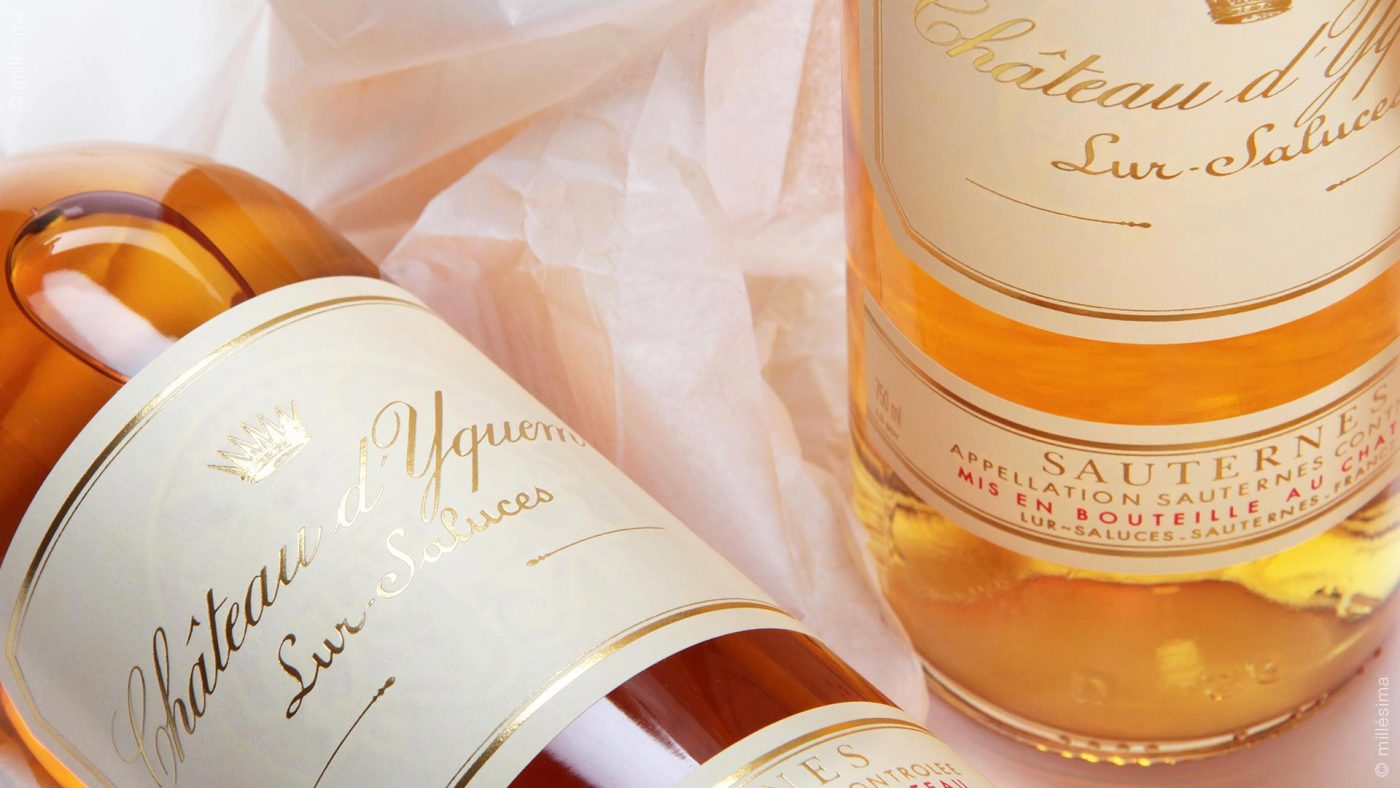
Château d’Yquem Sauternes: The Spellbinding Story of the World’s Greatest Dessert Wine
Jul
Château d’Yquem Sauternes: The Spellbinding Story of the World’s Greatest Dessert Wine
Most great wine is made by defeating rot.
The entire infrastructure of fine winemaking — careful canopy management, spray programmes, harvest timing decisions — exists largely to protect fruit from the fungal diseases that would otherwise compromise it. Vintners in Burgundy, Bordeaux, Napa, and Champagne spend the entire growing season in a quiet, sustained battle against deterioration, trying to get pristine, healthy grapes to the press house before nature does what it naturally does.
At Château d’Yquem Sauternes, they invite the rot in.
Not just any rot — a very specific one. Botrytis cinerea, the fungus that winemakers everywhere else treat as an enemy, arrives at Château d’Yquem Sauternes as an honoured guest. In the misty, maritime mornings along the Ciron river that borders the estate, Botrytis settles on the Sémillon and Sauvignon Blanc grapes and performs a transformation that no winemaker’s skill can replicate without it: it pierces the grape skin, allows water to evaporate, and concentrates the natural sugars, acids, and flavour compounds inside to a degree of intensity that healthy grapes can never achieve.
What truly sets Château d’Yquem Sauternes apart is the magic of noble rot — Botrytis cinerea. Located in Sauternes, a small subregion of Bordeaux, Château d’Yquem benefits from a unique climate: misty mornings and sunny afternoons, perfect for noble rot to thrive. The fungus dehydrates the grapes, concentrating their sugars and creating the rich, complex sweetness that d’Yquem is known for. TradingGrapes
The result — tasted in a glass of Château d’Yquem Sauternes at its best — is unlike anything else produced in wine. Honey, apricot, saffron, tropical fruit, caramel, and a thread of electric acidity that prevents the sweetness from becoming cloying. A wine of extraordinary complexity that improves in the bottle for decades, sometimes centuries. And the only wine ever classified as Premier Cru Supérieur — above every other Sauternes produced anywhere.
This is the complete guide to Château d’Yquem Sauternes — the history, the winemaking, every vintage explained and priced, the investment case, the legendary food pairings, and exactly how to buy online with confidence.
The Classification That Stands Alone: Premier Cru Supérieur
When Napoleon III commissioned the 1855 Bordeaux Classification, the committee faced a problem with Sauternes: they could not honestly place one estate in the same category as the others. The quality of Château d’Yquem Sauternes was so demonstrably superior to every other Sauternes producer that a separate designation was required.
Raised to the ranks of Premier Cru Supérieur in 1855, Château d’Yquem Sauternes is the product of meticulous work in the vineyard. Since its beginnings, it has benefited from an exceptional terroir, as well as being the result of a unique ancestral know-how since 1593. Wine-Searcher
Premier Cru Supérieur — First Superior Growth — is a designation that exists for one estate and one estate alone. There is no second wine classified at this level. No other Sauternes has ever earned it. The classification was not awarded on brand recognition or commercial success — it was awarded because a committee of Bordeaux’s most experienced wine merchants tasted Château d’Yquem Sauternes blind against every other sweet wine the region produced and concluded, unanimously, that it occupied a different category.
Château d’Yquem Sauternes is the only wine that almost everyone, everywhere agrees stands head and shoulders above every other wine in the appellation. While expensive at more than twice the price of every other wine from Sauternes, when the wine matures, Château d’Yquem Sauternes stands head and shoulders above every other sweet Bordeaux wine from the region as well as every other sweet wine from any vineyard in the world. The Wine Cellar Insider
That assessment — written by a fine wine professional with decades of Sauternes experience — is not hyperbole. It is the critical consensus. No sweet wine produced anywhere on earth — not German Trockenbeerenauslese, not Hungarian Tokaji, not Loire Valley Vouvray Moelleux — generates the same critical reverence or commands the same secondary market prices as the finest Château d’Yquem Sauternes vintages.
Explore our Fine Wine collection at Noir Cellars → for Château d’Yquem Sauternes alongside our complete range of First Growth Bordeaux and Grand Cru Burgundy.
400 Years of History at Château d’Yquem Sauternes
The estate that produces Château d’Yquem Sauternes has been making wine since 1593 — a history that predates most of the great Bordeaux Maisons, most of Champagne’s famous houses, and almost every institution in the world of fine wine. Understanding that history contextualises everything about how the wine is made and why the price reflects what it does.
Château d’Yquem Sauternes had been in the hands of the Lur Saluces family from 1785 to 1997 — over two centuries of unbroken family stewardship during which the estate’s standards were maintained through wars, economic crises, and the constant difficulty of producing a wine entirely dependent on the arrival of a specific fungus in a specific weather window. Greatbordeauxwines
In 1999, LVMH — the luxury conglomerate that also owns Moët & Chandon, Dom Pérignon, Krug, and Hennessy — acquired majority control of Château d’Yquem Sauternes, completing the process that had begun with the gradual acquisition of family shares in the late 1990s. The LVMH ownership brought significant investment in both vineyard management and winery infrastructure while maintaining the winemaking philosophy established across centuries of family production.
Just as LVMH brands command a premium, Château d’Yquem Sauternes is a blue-chip asset in the wine world. Its exclusivity, rarity, and unique production requirements make it a prestigious investment alongside its outstanding quality. TradingGrapes
The most extraordinary demonstration of Château d’Yquem Sauternes’ historical significance came at auction in 2011. Château d’Yquem Sauternes holds the record for the world’s most expensive bottle of white wine. In 2011, at an auction, a single bottle of the historic 1811 d’Yquem was bought for $117,000. A wine made more than two centuries ago — in Napoleon’s era, when the vineyards we know today were already producing — was still alive, still complex, still worth extraordinary sums on the secondary market. No other white wine has ever come close to this. The Wine Cellar Insider
How Château d’Yquem Sauternes Is Made: The Noble Rot Process
The winemaking at Château d’Yquem Sauternes is among the most labour-intensive and weather-dependent in the entire world of wine. Understanding the production process explains both the wine’s extraordinary quality and why its price can never be dramatically lower without compromising what makes it exceptional.
The Château d’Yquem Sauternes vineyards cover approximately 102 hectares, planted to 80% Sémillon and 20% Sauvignon Blanc. The estate sits where the Ciron river meets the Garonne — a confluence that creates the specific morning mist conditions necessary for Botrytis cinerea to develop on the grapes without causing the kind of destructive grey rot that affects the same fungus in different conditions.
Château d’Yquem Sauternes is made without any compromises or consideration whatsoever about production costs — pickers are on constant alert for 1.5–2 months and do many picking rounds in the vineyard. Often, these rounds are double or triple the number of passes made at other estates. Greatbordeauxwines
The harvest at Château d’Yquem Sauternes cannot be mechanised. Each berry must be selected individually — picked at the precise moment when Botrytis has done exactly the right amount of work on that specific grape, not too little (insufficient concentration) and not too much (destruction of the grape’s structure). Harvesters pass through the same rows of vines multiple times over six to eight weeks, picking only the grapes that have reached the correct state of noble rot at each pass. A harvest of ten passes through the same vineyard is not unusual.
The consequence of this approach is a yield so low that it defies economic logic by conventional winemaking standards. A standard fine wine estate producing at commercially viable yields might harvest 40–50 hectolitres per hectare. Château d’Yquem Sauternes typically produces approximately 9 hectolitres per hectare — equivalent to one glass of wine per vine, per year.
Château d’Yquem Sauternes doesn’t make wine every year. If conditions aren’t ideal, they’ll skip production to maintain their legendary quality. This selectivity adds to the scarcity — and the allure. When the stars align, though, they produce something extraordinary. TradingGrapes
Those years when the conditions are not right — when the Botrytis does not develop correctly, or when rain during harvest dilutes the concentration the estate requires — Château d’Yquem Sauternes simply does not produce a wine. In the 20th century alone, the estate declared no vintage in 1910, 1915, 1930, 1951, 1952, 1964, 1972, 1974, and 1992. Each of those years, the most famous Sauternes estate on earth decided that producing anything would compromise everything. That decision costs millions. They make it anyway.
Château d’Yquem Sauternes Tasting Notes: What You Actually Experience in the Glass
Château d’Yquem Sauternes has an exquisite buttery taste, complemented by tropical fruit, manuka honey tasting notes, and a hint of spiciness. Vinovest
But that description — accurate for a young expression — captures only the first chapter of what Château d’Yquem Sauternes becomes over time. The evolution of this wine through its development arc is one of the most extraordinary sensory journeys in all of fine wine.
Young Château d’Yquem Sauternes (0–15 years):
Young d’Yquem bursts with tropical fruits, apricots, and honey. The primary fruit character is intense and vivid — mango, pineapple, dried apricot, lemon curd, and orange blossom — wrapped in a texture of remarkable density. The acidity that threads through the sweetness is electric, preventing any sense of cloying richness and providing the structural backbone for decades of development. In this phase, Château d’Yquem Sauternes is immediately gratifying but gives no hint of the complexity that time will reveal. TradingGrapes
Developing Château d’Yquem Sauternes (15–40 years):
As the wine ages further, often those yellow tropical fruit flavors fade and tasters experience flavors of caramel, burnt toast, spice, and crème brûlée. This is where Château d’Yquem Sauternes becomes genuinely extraordinary — where the transformation from fruit-dominated sweetness to complex, tertiary character creates a drinking experience that has no equivalent in any other wine category. Saffron, beeswax, candied orange peel, praline, roasted almonds, and the famous crème brûlée note emerge and interweave in a way that requires no food and no context. The wine is the occasion. The Wine Cellar Insider
Ancient Château d’Yquem Sauternes (50+ years):
The rarest Château d’Yquem Sauternes experience — and the one documented in the auction records of the 1811 vintage — is the ancient expression. Colour deepens to extraordinary amber-mahogany. The sweetness integrates completely. The complexity achieves a dimension of aged wisdom that critics reach for language they have never previously used. These are museum pieces that happen to be drinkable — the most compelling argument that wine is a living art form.
Château d’Yquem Sauternes Price Guide 2025: Every Vintage Explained
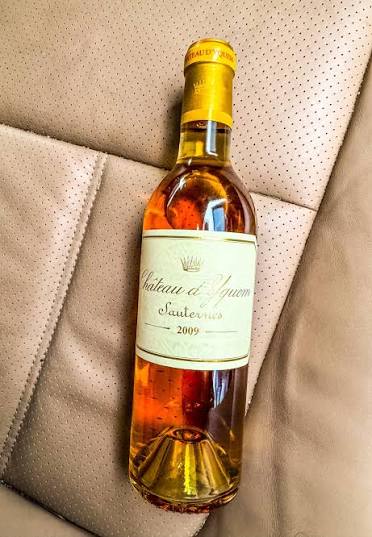
The average price for Château d’Yquem Sauternes is approximately $489 per 750ml bottle in the USA as of current data. That average, however, conceals enormous vintage variation — the difference between the most accessible and the most sought-after Château d’Yquem Sauternes expressions spans from approximately $300 to $15,000+ per bottle. Wine-Searcher
Current Château d’Yquem Sauternes vintage prices and critic scores: Wine-Searcher
| Vintage | Critics Score | Price (EUR) | Notes |
|---|---|---|---|
| 2023 | 98/100 | From €326 | Most recent release — outstanding critical reception |
| 2022 | 97/100 | From €319 | Excellent warmth-driven concentration |
| 2021 | 96/100 | From €326 | 98 points from individual critics on re-tasting |
| 2020 | 96/100 | From €339 | Balanced and elegant |
| 2019 | 95/100 | From €326 | Reliable and consistent |
| 2018 | 95/100 | From €351 | Richer, more concentrated |
| 2017 | 97/100 | From €415 | Exceptional — one of the finest modern vintages |
| 2015 | 98/100 | From $480 | Outstanding — the benchmark modern drinking vintage |
The benchmark vintage — 2001:
The 2001 Château d’Yquem Sauternes received a perfect 100-point score from multiple wine critics and remains one of the estate’s best vintages in recent decades. The 2001 is widely considered the definitive modern expression of Château d’Yquem Sauternes — now trading at $1,200–$1,800 per bottle on the secondary market and approaching the peak of its first great drinking window. TradingGrapes
The investment pinnacle vintages:
The finest historic Château d’Yquem Sauternes expressions — 1989, 1990, 1988, 1986, 1983, and the legendary 1967 — now trade at $2,000–$8,000+ per bottle depending on condition and provenance. The best vintages of Château d’Yquem Sauternes are: 2023, 2022, 2021, 2020, 2019, 2018, 2017, 2016, 2015, 2014, 2013, 2011, 2010, 2009, 2007, 2005, 2003, 2001, 1997, 1996, 1990, 1989, 1988, 1986, 1983, 1976, 1975, 1967, 1962, 1959, 1949, 1947, 1945, 1937, 1929, 1927, 1921, 1893, 1869, and 1811. The Wine Cellar Insider
For current availability and pricing across all vintages, visit our Fine Wine Bordeaux collection → or contact our concierge team at concierge@noircellars.com.
Château d’Yquem Sauternes as an Investment: The Case for Liquid Gold
One of the most exciting things about Château d’Yquem Sauternes is its exceptional ageing potential. Thanks to its high sugar content and balanced acidity, it evolves beautifully over time. For collectors, this means d’Yquem can be enjoyed now or held for decades — its value both in your glass and pocket only increases with age. Bottles over 50 years old can sell for multiples of their original price. TradingGrapes
The investment case for Château d’Yquem Sauternes rests on a structural foundation that no other sweet wine category matches — and that few red wines can equal.
The no-vintage-declared decision creates artificial rarity that is actually genuine. When Château d’Yquem Sauternes declares no wine in a difficult year, the global supply of that vintage is zero. There is no alternative, no second label, no producer-adjacent option. Collectors who want d’Yquem from a specific year either find it in the secondary market or go without. This absolute scarcity in specific vintages creates price dynamics that can be dramatic — particularly for the most celebrated expressions.
The ageing potential creates an investment horizon unmatched in wine. Most fine wine investment operates on 10–20 year horizons. Château d’Yquem Sauternes operates on 50–200 year horizons. The 1811 sold for $117,000 in 2011 — 200 years after production. The 1869 remains drinkable in the 21st century. No other wine investment category offers these time parameters.
LVMH ownership provides institutional quality assurance. Just as LVMH brands command a premium, Château d’Yquem Sauternes is a blue-chip asset in the wine world. The same group that manages Dom Pérignon — which we profiled in our complete Dom Pérignon guide → — now oversees Château d’Yquem Sauternes with the same institutional rigour, distribution standards, and quality commitment that LVMH applies across its fine wine portfolio. TradingGrapes
For buyers building a fine wine investment portfolio that includes Château d’Yquem Sauternes, read our investment grade wine guide → and our best wine for investment 2025 → for the complete portfolio context.
Château d’Yquem Sauternes ‘Y’ (Ygrec): The Dry White Counterpart
Most buyers are unaware that Château d’Yquem Sauternes produces a second wine — and that it is one of the most fascinating and underappreciated expressions in all of Bordeaux.
Château d’Yquem Sauternes also produces a rare dry white wine called ‘Y’ (pronounced Ygrec), made in select vintages. Crafted from Sauvignon Blanc and Sémillon before noble rot sets in, it’s a fresh contrast to their sweet Sauternes. TradingGrapes
‘Y’ is produced only in certain vintages when the winemaking team judges that the dry expression deserves to be made — it is not a regular annual release. It draws on the same exceptional terroir as the Château d’Yquem Sauternes grand vin but harvested earlier, before Botrytis sets in, to produce a dry wine of remarkable intensity and mineral precision.
For collectors who want Château d’Yquem Sauternes terroir in a dry white format — as an aperitif, as a dinner wine, or simply as the most extraordinary dry white Bordeaux produced — ‘Y’ represents a unique and compelling alternative to the grand vin. Available in highly limited quantities through our concierge service. Contact concierge@noircellars.com for availability enquiries.
Château d’Yquem Sauternes Food Pairing: Beyond the Obvious
The instinctive pairing for Château d’Yquem Sauternes — foie gras — is correct. The wine’s honeyed richness, electric acidity, and aromatic complexity find their most celebrated match in the silky, fatty luxury of foie gras, with the acidity cutting through the richness of the liver and the sweetness amplifying the savoury-sweet character of the preparation. This is the classical Sauternes pairing for a reason: it produces one of the great food and wine experiences available anywhere.
You can pair this outstanding Château d’Yquem Sauternes with elegant foie gras or seafood dishes like shellfish, lobster, oysters, or even sushi. The wine also goes well with more traditional meats like roasted pork, spicy chicken, or different cheese platters. Vinovest
But Château d’Yquem Sauternes is more versatile than this single famous pairing suggests — and the most surprising pairings often deliver the most memorable experiences:
Roquefort cheese: The most counterintuitive and most celebrated pairing in the Château d’Yquem Sauternes canon. The salt and sharpness of a great Roquefort creates a dialogue with the wine’s sweetness that produces a new flavour — something neither the cheese nor the wine creates alone. This pairing has been described by critics as one of the great gastronomic discoveries available in fine wine. Try it with our Champagne gift delivery → as part of a tasting experience for a significant occasion.
Asian cuisine with sweetness or spice: The aromatic complexity and balancing acidity of Château d’Yquem Sauternes work beautifully alongside Thai, Vietnamese, and Chinese preparations with sweet, sour, or spicy elements. The wine’s tropical fruit character echoes and amplifies the fruit-forward flavours in these cuisines in ways that dry wines cannot achieve.
Crème brûlée and fruit tarts: The mirror-pairing — wine and dessert sharing the same caramel, custard, and fruit notes — that produces a seamless harmony of flavour. Match the sweetness level carefully: Château d’Yquem Sauternes should be sweeter than the dessert, not the other way round.
Sole or turbot with cream sauce: The richness of fine white fish in a buttery cream preparation finds an extraordinary partner in a young Château d’Yquem Sauternes — the wine’s acidity cuts through the cream while its tropical fruit character amplifies the delicacy of the fish.
For occasion-matched pairing recommendations and gifting guidance, visit our gifts collection → or our best Champagne for wedding guide → for special occasion wine service ideas.
How to Buy Château d’Yquem Sauternes Online: The Essential Guide
Buying Château d’Yquem Sauternes online requires the same rigorous provenance and storage standards as any fine wine investment purchase — and several considerations specific to dessert wine that dry wine buyers do not always think about.
Temperature sensitivity is significant. Château d’Yquem Sauternes is more sensitive to temperature abuse than its sugar content might suggest. Heat causes the complex volatile aromatic compounds developed through the Botrytis process to degrade irreversibly — compromising precisely the aromatic character that distinguishes great Château d’Yquem Sauternes from ordinary Sauternes. Every Noir Cellars Château d’Yquem Sauternes order ships in temperature-controlled packaging with full insurance cover. Read our fine wine delivery UK guide → for the full details of our delivery standards.
Fill level matters enormously for older vintages. In older Château d’Yquem Sauternes — particularly bottles from the 1980s and 1990s — the fill level is a critical quality indicator. Normal evaporation through the cork means that bottles stored correctly for 30+ years should show some level reduction, but excessive ullage (the gap between the wine and the cork) suggests improper storage or cork failure. Always confirm fill level information before purchasing aged Château d’Yquem Sauternes.
Half bottles are a legitimate option. Château d’Yquem Sauternes is one of the few fine wines where the half bottle (375ml) format is actively recommended for buyers who want to explore different vintages without committing to the full bottle price. The wine is concentrated enough that half a bottle is a complete experience in ways that half a bottle of a light red is not.
Buy Château d’Yquem Sauternes at Noir Cellars → — current and back vintages, full provenance documentation, temperature-controlled storage, insured worldwide delivery. Contact concierge@noircellars.com for specific vintage availability and half-bottle enquiries.
Frequently Asked Questions
What is Château d’Yquem Sauternes?
Château d’Yquem Sauternes is the only Sauternes to hold the Premier Cru Supérieur designation — the pinnacle of the 1855 Bordeaux Classification. It is a sweet white wine made from Sémillon and Sauvignon Blanc grapes affected by Botrytis cinerea — noble rot — which concentrates sugars and flavour compounds to produce a wine of extraordinary richness, complexity, and ageing potential. Produced since 1593, now owned by LVMH, and universally considered the greatest sweet wine produced anywhere on earth. Explore all available expressions in our Fine Wine Bordeaux collection →. Wine-Searcher
How much does Château d’Yquem Sauternes cost?
The average price for Château d’Yquem Sauternes is approximately $489 per 750ml bottle. Current release vintages (2022, 2023) range from approximately €319–€326 per bottle. The benchmark 2015 and 2017 vintages trade from $480–$600. The iconic 2001 (100 points) trades at $1,200–$1,800 per bottle. Historic vintages (1989, 1990) range from $2,000–$8,000+. The 1811 sold at auction for $117,000. Contact concierge@noircellars.com for current vintage availability. Wine-Searcher
What is the best Château d’Yquem Sauternes vintage to buy?
The best vintages of Château d’Yquem Sauternes include 2023, 2021, 2017, 2015, 2001, 1997, 1990, 1989, 1988, 1986, and 1983. The 2001 is the benchmark modern vintage — 100 points from multiple critics and now entering its peak drinking window. The 2017 is the best current-release vintage for quality and investment potential. For immediate drinking, the 2015 is generous, fully developed, and outstanding. Browse all available vintages in our Fine Wine Bordeaux collection →. The Wine Cellar Insider
Is Château d’Yquem Sauternes a good investment?
For collectors, Château d’Yquem Sauternes can be enjoyed now or held for decades — its value both in your glass and pocket only increases with age. Bottles over 50 years old can sell for multiples of their original price. The 1811 vintage sold for $117,000 at auction. Château d’Yquem Sauternes has one of the longest investment appreciation windows of any wine — and arguably the strongest historic evidence that wine can appreciate meaningfully across century-length holding periods. Read our investment grade wine guide → for full context. TradingGrapes
What food pairs best with Château d’Yquem Sauternes?
The classical pairing is foie gras — the combination of the wine’s honeyed sweetness and electric acidity cutting through the richness of duck liver in a way that produces one of the great gastronomic experiences in fine wine. The most surprising and memorable pairing is Roquefort cheese — the salt and sharpness of the blue cheese against the wine’s sweetness creates an entirely new flavour that neither element achieves alone. Château d’Yquem Sauternes also pairs beautifully with shellfish, lobster, oysters, roasted pork, spicy chicken, and crème brûlée or fruit tarts. Vinovest
How long does Château d’Yquem Sauternes last in the cellar?
Château d’Yquem Sauternes has the longest ageing potential of any white wine produced anywhere. Thanks to its high sugar content and balanced acidity, Château d’Yquem Sauternes evolves beautifully over time — and remains extraordinary for decades, sometimes centuries, in the right conditions. Current releases can be drunk young but reward 20–50 years of cellaring enormously. The finest historic vintages remain alive and developing after a century or more. TradingGrapes
Where can I buy Château d’Yquem Sauternes online?
Noir Cellars stocks Château d’Yquem Sauternes across multiple current and back vintages with full provenance documentation, temperature-controlled storage from receipt, and insured worldwide delivery. Visit noircellars.com/fine-wine/bordeaux → or contact our concierge team at concierge@noircellars.com for vintage-specific availability, half-bottle enquiries, and investment-grade case pricing.
Château d’Yquem Sauternes — from the current 2023 vintage to the benchmark 2001 and rare historic expressions — is available at Noir Cellars with full provenance, temperature-controlled storage, and insured worldwide delivery. Visit noircellars.com/fine-wine/bordeaux or contact our concierge at concierge@noircellars.com.