Wine Category
Burgundy Grand Cru: The Extraordinary Guide to the World’s Most Coveted Wines
Jul
Burgundy Grand Cru: The Extraordinary Guide to the World’s Most Coveted Wines
In the entire world of fine wine, there are approximately 525 hectares of Burgundy Grand Cru vineyard. That is it. The total. The complete supply of the most revered terroir on earth, established by centuries of observation, classification, and irreversible geological fact — and not a single additional hectare can ever be added to it.
For context: a single large Bordeaux estate can span 80 hectares of vines. A major Champagne Maison sources grapes from hundreds. The entirety of Burgundy Grand Cru production — from the most famous Romanée-Conti monopole through every classified parcel of Gevrey-Chambertin, Chambolle-Musigny, Musigny, Corton, Montrachet, and every other Grand Cru appellation in the Côte d’Or — fits inside a landholding that a single Napa Valley estate would not bother mentioning.
The total vineyard area classified as Grand Cru in Burgundy is approximately 525 hectares. This land cannot be expanded; the classification boundaries were set by centuries of observation and cannot be changed. Meanwhile, global demand for the finest Burgundy Grand Cru wines has surged as collectors from Asia, the Middle East, and the Americas have entered the market. The number of individual Burgundy wines trading on Liv-ex more than doubled between 2018 and 2022 — from 829 to 1,924 — reflecting the broadening collector base. IWSR
Fixed supply. Doubling demand. Wines that improve for half a century in the cellar. The finest winemakers on earth working their specific parcels with a level of obsessive attention that large-scale production simply cannot sustain.
This is the complete guide to Burgundy Grand Cru — the appellations, the producers, the vintages, the investment case, and exactly how to buy online with the provenance and expertise the wines deserve.
What Burgundy Grand Cru Actually Means: The Classification Explained
Burgundy’s quality hierarchy is the most complex and the most geographically precise in the wine world — and understanding it is the essential first step for any serious buyer approaching this category.
Unlike Bordeaux — which classifies estates — Burgundy Grand Cru classifies individual vineyard plots. The same piece of land classified as Grand Cru may be farmed and vinified by a dozen different growers, each producing a wine of different character and quality from the same classified terroir. This is the fundamental truth that separates Burgundy Grand Cru from every other classification system: the name on the label matters as much as the appellation, because the producer’s decisions — farming philosophy, yield management, fermentation approach, élevage — shape the wine as dramatically as the soil beneath the vines.
In Burgundy, wines are classified not by producer but by vineyard — with each parcel often split between several growers. Grand Cru wines are Grand Cru for a reason, and tend to be priced accordingly. The most sought-after appellation in Burgundy is Romanée-Conti, produced by Domaine de la Romanée-Conti — this Grand Cru vineyard is renowned for its exceptional quality and limited production, making it one of the most prestigious and expensive wines globally. Statista
The Burgundy quality hierarchy, from highest to lowest:
Grand Cru — the pinnacle. 33 individual Grand Cru appellations across the Côte d’Or, each a specifically delineated parcel with its own AOC designation. Romanée-Conti, La Tâche, Chambertin, Musigny, Montrachet, Corton-Charlemagne. These are the names that collectors and investors track with the attention most people reserve for financial markets. A single bottle of Burgundy Grand Cru from the finest producers can fetch more at auction than many people spend on a car.
Premier Cru — the second tier. 640 individual Premier Cru sites across the Côte d’Or, each carrying the producer name and Premier Cru designation. The finest Premier Crus from the greatest producers often match or exceed Grand Cru quality from lesser domaines.
Village — wines produced from vineyards within a specific Burgundy village. Gevrey-Chambertin, Chambolle-Musigny, Vosne-Romanée, Pommard. The best Village wines from top producers represent extraordinary value.
Bourgogne — regional-level wines. The entry point to the Burgundy appellation, though the finest domaines produce Bourgogne of remarkable quality that vastly outperforms its classification.
For serious buyers, Burgundy Grand Cru is the investment-grade tier. Premier Cru from the finest producers is the intelligent collector’s tier. Both belong in any cellar built to evolve over decades. Browse our complete Fine Wine collection at Noir Cellars → for currently available expressions across both tiers.
The Burgundy Grand Cru Appellations: A Complete Map
Burgundy Grand Cru vineyards are concentrated in the Côte d’Or — the golden slope running south from Dijon — divided into the Côte de Nuits in the north and the Côte de Beaune in the south. Each Grand Cru appellation has its own personality, shaped by its specific position on the slope, its soil composition, its drainage, and its microclimate.
Côte de Nuits — The Red Burgundy Grand Cru Heartland
The Côte de Nuits produces the world’s greatest Pinot Noir — and its Burgundy Grand Cru appellations represent the most sought-after red wine addresses on earth.
Gevrey-Chambertin is home to nine Burgundy Grand Cru appellations — the most of any single commune — including Chambertin, Chambertin Clos de Bèze, Mazis-Chambertin, Latricières-Chambertin, and Charmes-Chambertin. Gevrey is the most powerful, most structured, most age-demanding corner of the Côte de Nuits — its Grand Cru wines built for 20–30 years of development, expressing the iron-rich Comblanchien limestone soils in a vocabulary of dark fruit, earth, incense, and graphite that no other appellation replicates.
Chambolle-Musigny produces the most perfumed, most delicate Burgundy Grand Cru — the antithesis of Gevrey’s power. Musigny Grand Cru — produced in the finest expressions by Domaine Georges Roumier, Domaine Leroy, and Domaine Comte de Vogüé — is Pinot Noir at its most ethereal: violet, rose, crushed stone, and a gossamer texture that seems to dissolve rather than finish. Bonnes Mares, the second Chambolle Grand Cru, is more structured and longer-lived.
Vosne-Romanée is the spiritual centre of Burgundy Grand Cru — the village from which Domaine de la Romanée-Conti produces its legendary range. Romanée-Conti itself (1.8 hectares, monopole), La Tâche (6 hectares, monopole), Richebourg, Romanée-Saint-Vivant, Grands Échézeaux, and Échézeaux all lie within this extraordinary commune. Vosne-Romanée Grand Cru wines are defined by a haunting combination of red and black fruit, silken texture, and an earthy, forest-floor complexity that develops over decades.
Clos de Vougeot is the largest single Burgundy Grand Cru appellation in the Côte de Nuits — 50 hectares, divided among more than 80 growers. Quality varies enormously by producer, making it the most producer-dependent Grand Cru in Burgundy. In the finest hands — Domaine Leroy, Domaine Jean Gros, Château de la Tour — it produces wines of extraordinary complexity and longevity.
Côte de Beaune — White Burgundy Grand Cru at Its Greatest
The Côte de Beaune is where Burgundy Grand Cru Chardonnay reaches its absolute pinnacle — and where the most famous white wine names in the world are produced from parcels measured in fractions of a hectare.
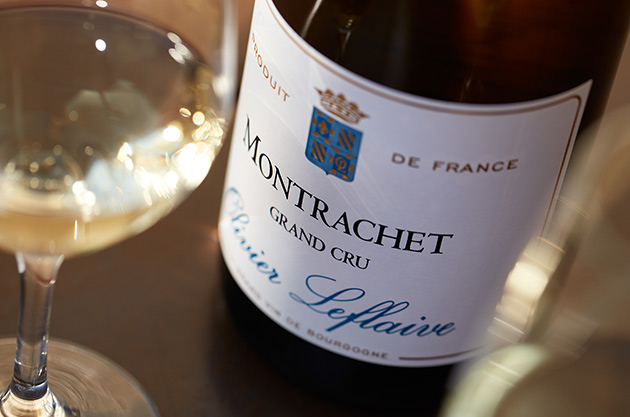
Montrachet is the most celebrated white wine Grand Cru in Burgundy — arguably the most celebrated dry white wine vineyard in the world. The 8-hectare plot straddles the boundary between Puligny-Montrachet and Chassagne-Montrachet, farmed by a handful of producers including Domaine de la Romanée-Conti, Domaine Leflaive, and Domaine Ramonet. Montrachet Grand Cru is Chardonnay of incomparable density, complexity, and longevity — a white wine capable of developing in the cellar for 25–30 years.
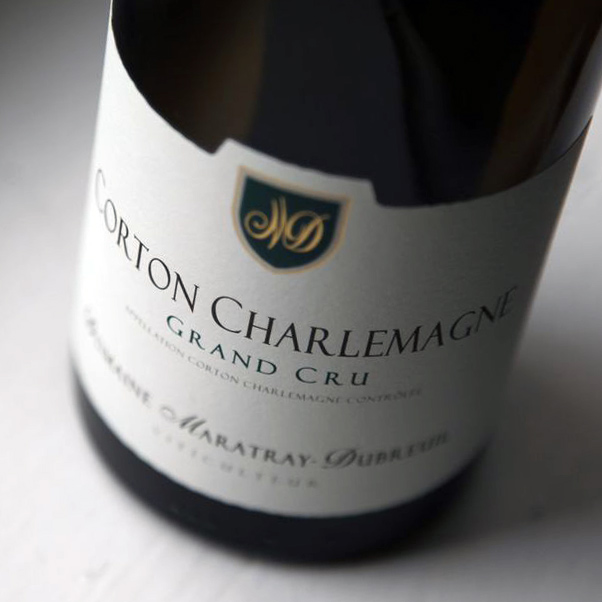
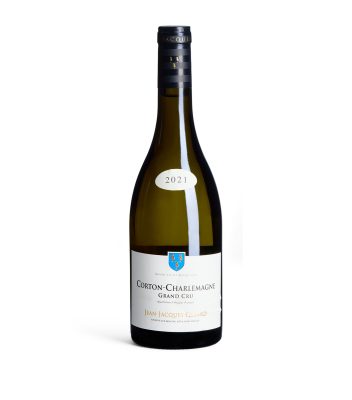
Corton-Charlemagne is the largest white Burgundy Grand Cru — spreading across the hill of Corton in Aloxe-Corton — and the producer of the most powerful, most mineral white Burgundy Grand Cru outside of Montrachet. Domaine Coche-Dury’s Corton-Charlemagne is among the most sought-after white wines produced anywhere.
Chevalier-Montrachet and Bâtard-Montrachet flank the Montrachet parcel on the Puligny-Montrachet slope — each producing Burgundy Grand Cru Chardonnay of comparable greatness at slightly different flavour profiles. Chevalier is more delicate and mineral; Bâtard is richer and more opulent.
Explore our Fine Wine Burgundy collection → for currently available Burgundy Grand Cru and Premier Cru expressions from across the Côte d’Or.
The Greatest Burgundy Grand Cru Producers: Who to Buy From
In Burgundy Grand Cru, the producer is as important as the appellation. The same classified vineyard, farmed and vinified by different producers, produces meaningfully different wines. Here are the producers whose Burgundy Grand Cru wines command the deepest collector following and the most reliable investment returns.
Domaine de la Romanée-Conti (DRC) — The Undisputed Pinnacle
DRC’s Romanée-Conti Grand Cru is the most expensive wine in the world, with an average price of approximately £172,461 per case in the 2025 Liv-ex Classification. The domaine produces eight wines from Grand Cru vineyards in Vosne-Romanée and a Montrachet white, all in tiny quantities. DRC bottles have delivered compound annual growth rates exceeding 10% over the past decade, and demand from Asia — particularly China and Hong Kong — continues to intensify. IWSR
DRC is the definitive Burgundy Grand Cru producer — the benchmark against which every other domaine measures its ambitions, and the source of the most consistently, dramatically appreciated investment wines in all of fine wine. The range spans from the accessible (by DRC standards) Échézeaux Grand Cru through to the £172,000-per-case Romanée-Conti monopole. Every wine in the range is produced from Grand Cru terroir using the same biodynamic farming philosophy and the same winemaking precision that has built a reputation across seven decades.
For investment and collection at every budget level that DRC allows, explore our Fine Wine Burgundy collection → for currently available DRC expressions.
Domaine Armand Rousseau — The Gevrey-Chambertin Master
Famous for Chambertin and Clos de Bèze, Armand Rousseau produces Pinot Noir from Gevrey-Chambertin that showcases elegance and depth. Rousseau’s Chambertin Grand Cru serves as the crown jewel — a wine of exceptional balance, depth, and ageing capacity that is anticipated to see appreciable value growth over time. Given its rarity and high demand, Rousseau is consistently among the strongest-performing Burgundy Grand Cru producers in secondary market analysis. Statista
Domaine Armand Rousseau is a cornerstone of Burgundy’s vinous heritage — a byword for purity, precision, and pedigree. For over a century, this storied domaine has sculpted Pinot Noir into something transcendent, sourcing from some of the Côte de Nuits’ most hallowed Grand and Premier Cru vineyards — Chambertin, Clos de Bèze, Clos Saint-Jacques. GlobeNewswire
At the investment level, Rousseau’s Burgundy Grand Cru range offers entry positions at $1,000–$3,000 per bottle for the more accessible expressions, rising to $8,000–$15,000 for Chambertin Grand Cru in the finest vintages. For buyers who cannot access DRC at current prices, Rousseau is the most compelling alternative Burgundy Grand Cru investment position.
Domaine Leroy — The Biodynamic Force
Known for Musigny Grand Cru and Chambertin, Domaine Leroy’s biodynamic practices result in highly acclaimed and intensely aromatic Pinot Noir. Founded by Lalou Bize-Leroy — who also co-directed DRC until 1992 — this domaine produces wines of extraordinary concentration and longevity. Leroy’s Musigny, Romanée-Saint-Vivant, and Richebourg are among the most sought-after Burgundy Grand Cru wines on earth. Statista
The finest Burgundy Grand Cru wines from Domaine Leroy — such as the 1999 Musigny Grand Cru — can cost over $70,000 per bottle. Lalou Bize-Leroy’s biodynamic farming philosophy — extremely low yields, no herbicides, no pesticides, total commitment to terroir expression — produces wines of a concentration and complexity that stand comparison with DRC at its finest. Statista
Domaine Georges Roumier — The Chambolle Specialist
Domaine Georges Roumier represents the zenith of Burgundian Pinot Noir, with its Musigny Grand Cru epitomising elegance and complexity. The 2020 vintage promises a harmonious balance of fruit concentration and structural tannins. The scarcity of production, coupled with global demand for Roumier’s wines, suggests that Musigny Grand Cru from this year is poised for substantial appreciation over time. The Rum Lab
Roumier’s Burgundy Grand Cru range centres on Musigny and Bonnes Mares from Chambolle-Musigny — two expressions that represent the polarity of the appellation’s character. Musigny delivers the most perfumed, most delicate Burgundy Grand Cru experience available from the domaine; Bonnes Mares delivers structure and longevity. Both are allocation wines — effectively unavailable without established retailer relationships.
Domaine Leflaive — The White Burgundy Grand Cru Benchmark
Esteemed for Chevalier-Montrachet and Puligny-Montrachet Les Pucelles, Domaine Leflaive is the benchmark for exquisite Burgundian Chardonnay — producing Burgundy Grand Cru Chardonnay of extraordinary precision and ageing potential from its Grand Cru holdings in Chevalier-Montrachet, Bâtard-Montrachet, and Bienvenues-Bâtard-Montrachet. Statista
For white Burgundy Grand Cru investment, Domaine Leflaive occupies the same tier as Rousseau for reds — a producer whose secondary market demand has grown consistently, whose critical scores are reliably superlative, and whose wines develop in the cellar with a complexity that justifies the investment case at every holding period.
Domaine Coche-Dury — The Cult White Burgundy Producer
Celebrated for its Meursault and Corton-Charlemagne, Coche-Dury produces sought-after Chardonnay noted for its complexity and longevity — wines that have become some of the most allocation-restricted and secondary-market-appreciated Burgundy Grand Cru and Premier Cru expressions produced anywhere. Statista
Coche-Dury’s Corton-Charlemagne Grand Cru and Meursault Premier Cru expressions have demonstrated secondary market appreciation that rivals DRC in percentage terms over comparable holding periods. The tiny production and impossibility of primary market access make secondary market sourcing through specialist retailers the only practical route to acquisition.
Burgundy Grand Cru Investment 2025: The Market Data
Burgundy accounts for nearly 69% of wines in the highest-value tier of the 2025 Liv-ex Classification. The Burgundy 150 index, despite a correction from its 2022 peak, still posted nearly 17% growth over five years through early 2025. DRC Grands Échézeaux 2021 rose 13.3% in 2025 alone, even as broader indices declined. Over ten years, prices for top DRC wines have increased approximately 300%. Domaine Roumier’s Bonnes Mares 1988 realised £68,250 at the Bill Koch auction in 2025 — far exceeding its Liv-ex market valuation. IWSR
Burgundy Grand Cru, which has fallen 5.8% year-to-date in the broader indices, remains one of the regions most affected by the broader market correction — but this is drawing in patient buyers. Liv-ex recently reported that the Burgundy 150’s bid-to-offer ratio is climbing as buyers take advantage of softer conditions. The best opportunities are in domaines with transparent distribution, consistent critic backing, and production levels that support liquidity — targeting age-worthy Grand and Premier Cru wines from established producers, especially where pricing has stabilised. The Rum Lab
The practical implication for buyers in 2025: Burgundy Grand Cru is available at prices not seen since 2014–2015 in several key expressions. The buyers quietly accumulating positions in Rousseau, Roumier, Leflaive, and accessible DRC expressions now are the same buyers who will be the beneficiaries when the next market cycle arrives.
Strong recent performers in 2025 include Domaine Michel Lafarge (+36% over 12 months), Domaine de la Vougeraie (+36%), and Samuel Billaud (+34%) — alongside Grand Cru benchmarks like Jean-Claude Bachelet’s Bienvenues-Bâtard-Montrachet (+30%). The Rum Lab
For the full investment context including portfolio allocation guidelines, minimum budgets, and diversification principles, read our investment grade wine buying guide → and our best wine for investment 2025 guide →.
The Best Burgundy Grand Cru Vintages to Buy Right Now
Vintage selection is as critical as producer selection when buying Burgundy Grand Cru. The same classified vineyard from the same producer can produce a wine of 95 points in one year and 88 in the next — and the secondary market prices those differences precisely.
2018 — The Benchmark Modern Red Burgundy Vintage
Warm, dry, and generous — the 2018 vintage produced red Burgundy Grand Cru of extraordinary ripeness and concentration while retaining the acidity that ensures long-term development. Currently in its early drinking window and still available at reasonable prices relative to quality. The Winecap data confirms 2018 as one of the two or three most investable recent red vintages.
2019 — The Elegant Counterpart
Recent red vintages 2019–2020 are concentrated yet balanced, and increasingly accessible as sellers meet the market — presenting compelling Burgundy Grand Cru entry points at corrected pricing. The 2019 is the more structured and food-friendly of the two warm-vintage expressions — built for longer cellaring than the opulent 2018. The Rum Lab
2020 — The White Burgundy Star
The 2020 vintage produced outstanding white Burgundy Grand Cru — concentrated, mineral, and built for the long term. Domaine Leflaive’s 2020 Chevalier-Montrachet and Coche-Dury’s 2020 Corton-Charlemagne are among the finest white Burgundy Grand Cru expressions of the decade.
2017 — The Drinking Window White
2017 is known for its delicious quality, particularly in white Burgundy. Wines from this vintage are ready to drink now, with producers like Domaine Leflaive and Domaine Coche-Dury offering excellent options. For buyers who want to experience Burgundy Grand Cru Chardonnay at its first peak, 2017 provides the most immediate gratification. Insightaceanalytic
2015 — The Collector’s Vintage
The 2015 red Burgundy Grand Cru vintage is, by consensus, one of the finest of the past 15 years — generous, concentrated, and built for multi-decade development. Available on the secondary market and approaching the beginning of its drinking window. For the investment buyer who wants a fully established critical consensus, this is the target vintage.
2025 — The Forward-Looking Opportunity
The 2025 Burgundy vintage is largely considered to be excellent. The growing season began with an unusually mild and dry winter and spring. Although time will ultimately tell, Burgundy 2025 could be set to be one of the greats for both reds and whites. En primeur purchasing of 2025 Burgundy Grand Cru expressions represents the longest-horizon forward-buying opportunity currently available in the region. Joe Bates
For vintage-specific guidance across all available expressions, explore our Fine Wine Burgundy collection → or contact our concierge team at concierge@noircellars.com.
Burgundy Grand Cru vs Bordeaux First Growth: The Honest Comparison
This is the comparison that defines every serious fine wine collector’s portfolio decision — and understanding it properly changes which category you prioritise.
Scale: A Bordeaux First Growth — Château Margaux, Latour, Lafite — produces 15,000–25,000 cases annually of its grand vin. The entire DRC range produces approximately 8,000 cases across eight different wines. Domaine Armand Rousseau’s total production across all Burgundy Grand Cru and Premier Cru expressions is approximately 6,000 cases. The scarcity differential between Burgundy Grand Cru and Bordeaux First Growth is categorical, not incremental.
Variety: Bordeaux First Growth is a blend — Cabernet Sauvignon dominant, with Merlot, Cabernet Franc, and others in supporting roles. Burgundy Grand Cru is a single variety — Pinot Noir for reds, Chardonnay for whites — making terroir legibility more direct and producer decisions more transparent.
Investment ceiling: The highest auction prices achieved by Bordeaux First Growth are impressive. The highest prices achieved by DRC and Leroy Grand Cru are in a different category. A bottle of 1886 La Tâche sold for £325,000 in December 2025 — more than 2,200% above its low estimate. The Burgundy Grand Cru investment ceiling exceeds Bordeaux at the pinnacle tier. IWSR
Accessibility: Bordeaux First Growth in the 2016 and 2019 vintages begins at approximately $800–$1,100 per bottle from our Bordeaux First Growth collection →. Accessible Burgundy Grand Cru — Échézeaux from DRC, Charmes-Chambertin from Rousseau — begins at similar price points. Both categories are covered in detail across our fine wine investment guide → and our best wine for investment 2025 →.
Burgundy Grand Cru Food Pairing: Matching the World’s Greatest Pinot Noir
Burgundy Grand Cru demands food of comparable seriousness and sensitivity. The extraordinary textural delicacy of the finest red Burgundy Grand Cru wines — particularly those from Chambolle-Musigny — is easily overwhelmed by robust flavours, heavy spicing, or strongly acidic preparations.
For Red Burgundy Grand Cru from Chambolle-Musigny (Musigny, Bonnes Mares):
The perfumed, delicate character of these wines finds its best partner in roasted duck breast with cherry reduction, roasted quail with truffle, wild mushroom risotto, and aged soft cheeses — particularly Époisses and Langres. The wine’s primary red-fruit intensity needs food of comparable elegance rather than weight.
For Red Burgundy Grand Cru from Gevrey-Chambertin (Chambertin, Clos de Bèze):
The structure and power of these wines calls for preparations with more substance — roasted rack of lamb with herbed crust, venison with root vegetables, braised wild boar, or a great aged Comté. The tannin framework of Gevrey’s Grand Cru wines needs protein weight to show its full complexity.
For White Burgundy Grand Cru (Montrachet, Corton-Charlemagne, Chevalier-Montrachet):
The greatest dry white wines on earth call for the greatest preparations the sea provides — roasted lobster, grilled Dover sole with beurre blanc, scallops with cauliflower purée, hand-dived crab, and fresh langoustines. White truffle risotto is the most celebrated pairing for mature Montrachet Grand Cru — a combination of mineral intensity and ancient complexity that creates a dialogue neither element could achieve alone.
For gifting occasions where Burgundy Grand Cru is the centrepiece, visit our Champagne gift delivery guide → and gifts collection → for packaging and presentation options.
How to Buy Burgundy Grand Cru Online: The Essential Standards
Buying Burgundy Grand Cru online requires standards that match the wines being purchased. At these price points and with this level of collector and investor interest in the secondary market, there is no room for provenance uncertainty.
Source from established specialist retailers with authorised supply. Burgundy Grand Cru wines are allocated — not freely available to any retailer who wants to stock them. Noir Cellars maintains established relationships with fine wine merchants who provide documented chain-of-custody from domaine to our cellar. This matters at every subsequent point in the wine’s life.
Insist on temperature-controlled storage from day one. Burgundy Grand Cru wines are among the most structurally sensitive fine wines produced — Pinot Noir’s delicacy makes it more vulnerable to temperature fluctuation than the tannic structure of Cabernet Sauvignon-dominant Bordeaux. Every Noir Cellars Burgundy Grand Cru order has been stored in specialist temperature-controlled facilities from receipt.
Buy in original packaging where available. Original wooden cases, original tissue, and purchase documentation are the provenance foundation that secondary market buyers require. Always specify OWC format at purchase for investment-grade Burgundy Grand Cru positions.
Work with a retailer who can advise on producer and vintage. In a region where the same appellation from twenty different producers spans 88 points to 100, expert guidance on which producers to prioritise within your target appellation is not optional. Our concierge team at Noir Cellars can advise on current availability, emerging producers, and the specific vintage expressions that represent the strongest value at current market pricing.
Browse the complete Burgundy Grand Cru collection at Noir Cellars → — DRC, Rousseau, Roumier, Leflaive, Coche-Dury, and more — with full provenance documentation, temperature-controlled storage, and insured worldwide delivery. Contact concierge@noircellars.com for current allocation availability and bespoke portfolio guidance.
Frequently Asked Questions
What is Burgundy Grand Cru?
Burgundy Grand Cru is the highest tier of the Burgundy quality classification — applied to 33 specific vineyard appellations in the Côte d’Or whose superior terroir has been recognised through centuries of observation and formal classification. The total vineyard area classified as Grand Cru in Burgundy is approximately 525 hectares — roughly the size of a single large Bordeaux estate. This land cannot be expanded; the classification boundaries are set and cannot be changed. Burgundy Grand Cru wines include the world’s most expensive bottles — DRC’s Romanée-Conti, Domaine Leroy’s Musigny, Armand Rousseau’s Chambertin — and represent the highest investment grade tier in all of fine wine. IWSR
Which Burgundy Grand Cru producer is the best?
Domaine de la Romanée-Conti is the universally recognised pinnacle — producing eight Grand Cru wines from Vosne-Romanée, all in tiny quantities, with consistently exceptional critical scores and the most reliable long-term investment appreciation of any producer in fine wine. For red Burgundy Grand Cru at slightly more accessible price points, Domaine Armand Rousseau and Domaine Georges Roumier represent the strongest investment cases. For white Burgundy Grand Cru, Domaine Leflaive and Domaine Coche-Dury are the benchmarks. Explore all available expressions at noircellars.com/fine-wine/burgundy →.
How much does Burgundy Grand Cru cost?
When you’re ready to invest in a Grand Cru, Armand Rousseau is a good place to start — these wines sell for an average of over $1,000, but the finest vintages can cost over $10,000. Entry Premier Cru wines from a rising producer like Georges de Vogüé’s Les Amoureuses sell for over $750. DRC Romanée-Conti averages £172,461 per case. Accessible Burgundy Grand Cru positions — DRC Échézeaux, Rousseau Charmes-Chambertin — begin from approximately $800–$1,500 per bottle. The full price spectrum across all available expressions is covered in our Fine Wine Burgundy collection →. Statista
Is Burgundy Grand Cru a good investment?
Burgundy Grand Cru wines offer substantial returns and portfolio diversification. Due to the small size of vineyards and strict production regulations, Burgundy wines are limited in production, contributing significantly to their investment appeal. This scarcity, combined with outstanding quality and increasing global demand, often leads to significant price appreciation. The Cult Wines Burgundy Index returned +131.37% since inception in January 2014 — one of the strongest long-term performance records of any fine wine category benchmark. Read our investment grade wine guide → and best wine for investment 2025 → for comprehensive portfolio context. StatistaIWSR
What is the best Burgundy Grand Cru vintage to buy in 2025?
For red Burgundy Grand Cru, the 2018 and 2019 vintages represent the strongest current value positions — extraordinary quality at prices corrected from 2022 peaks. The 2015 vintage is the most established collector target. For white Burgundy Grand Cru, the 2020 and 2017 vintages are outstanding. The 2025 vintage is being described as potentially one of the greats for both reds and whites — representing the longest-horizon forward-buying opportunity. Contact concierge@noircellars.com for availability on specific vintages and expressions.
Where can I buy Burgundy Grand Cru online?
Noir Cellars stocks Burgundy Grand Cru from the region’s most important producers — DRC, Rousseau, Roumier, Leflaive, Coche-Dury, and more — with full provenance documentation, temperature-controlled storage from receipt, and insured worldwide delivery. Visit noircellars.com/fine-wine/burgundy → or contact our concierge team at concierge@noircellars.com for current allocation availability, vintage guidance, and bespoke portfolio building.
Burgundy Grand Cru — from DRC and Armand Rousseau to Domaine Leflaive and Coche-Dury — is available at Noir Cellars with full provenance documentation, temperature-controlled storage, and insured worldwide delivery. Visit noircellars.com/fine-wine/burgundy or contact concierge@noircellars.com.