Wine Category
Best Wine for Investment 2025: Unstoppable Bottles That Are Quietly Building Fortunes
Jul
Best Wine for Investment 2025: Unstoppable Bottles That Are Quietly Building Fortunes
Nobody talks about wine investment the way they talk about stocks. There are no breathless analysts on cable news, no Reddit threads with rocket emojis, no overnight millionaires announcing their gains on social media. Wine investment operates in a quieter register — one where the people making the most serious returns are the ones who said the least about it, stored their cases properly for a decade, and sold into a market that reliably arrived to meet them.
That quietness is, in many ways, the point. The best wine for investment in 2025 is not speculative, not volatile, and not dependent on algorithmic trading or macroeconomic sentiment reversals. It is dependent on one elegant and irreversible fact: the finest bottles produced in the world’s greatest vineyards are consumed every year, and once consumed, they are gone. Supply shrinks. Quality is confirmed by time. Demand from a growing global collector class intensifies. And the bottles that remain — properly stored, fully documented, sourced from authorised channels — appreciate accordingly.
2025 remains a buyer’s market after a multi-year correction. Returns will be driven by selectivity on region, producer, and vintage, combined with provenance and a longer holding period rather than quick flips. This guide identifies exactly which bottles represent the best wine for investment in 2025 — ranked, reasoned, and priced — so every decision you make is informed by real market data rather than brand recognition alone. Statista
Why 2025 Is an Exceptional Moment to Buy the Best Wine for Investment
The timing context matters enormously when identifying the best wine for investment. Buying into any category at peak pricing — as many buyers did in 2021 and 2022 — creates a difficult return environment regardless of the underlying quality.
The fine wine market in 2025 showed mixed signals. Headline data pointed to softer conditions, but beneath the surface there were pockets of real strength — some labels delivering double-digit gains, proving that demand is still alive and well for the right wines. The Rum Lab
The recent correction has created compelling value in back vintages. The long-standing myth that the best wine for investment is always the latest release has been debunked by recent market behaviour. In 2025, many of the most sought-after wines for investment were not recent releases but mature, well-stored vintages offering proven quality, established critic scores, and immediate drinkability. Statista
The rise in trading volumes during 2025 was not driven by an increase in sellers — oversupply had already characterised the market in 2023 and 2024. Instead, higher transaction counts pointed squarely to the return of buyers. Enquiries and bid depth across blue-chip wines rose noticeably, signalling renewed engagement from buyers who had been absent for much of the year. The Rum Lab
The practical implication: the best wine for investment in 2025 is available at prices that represent genuine value relative to quality — entry points that have not existed since 2018 or 2019 in several key categories. Patient buyers with 5–15 year horizons are looking at one of the most compelling fine wine investment environments of the decade. The question is not whether to buy — it is which bottles to prioritise.
The 10 Best Wines for Investment in 2025: Ranked by Market Performance and Return Potential
1. Domaine de la Romanée-Conti (DRC) — The Undisputed Best Wine for Investment
DRC is the pinnacle of rare wine investing. Its ultra-limited production, legacy, and critical acclaim make it one of the most prestigious investment-grade wines globally. In 2025, flagship vintages like 2010 and 2015 have surged by 12–15%, driven by high demand in Asia and scarce availability. Liquidity is exceptional — regularly traded on platforms like Liv-ex and featured in prestigious auctions. The Rum Lab
DRC is the clearest answer to the question of the best wine for investment — not because it is the most accessible, but because it is the most structurally sound investment in all of fine wine. Production across the entire DRC range amounts to approximately 8,000 cases annually. Global demand from Asia, North America, Europe, and the Middle East far exceeds that number. Every bottle consumed removes supply that cannot be replaced. The mathematics of this situation have produced the most consistent secondary market appreciation of any wine producer over any meaningful time horizon.
A bottle of 1886 La Tâche sold for £325,000 in December 2025 — more than 2,200% above its low estimate. That result is the extreme end of a trajectory that the more accessible DRC expressions follow in the same direction over longer timescales. The Rum Lab
Best entry point: DRC Échézeaux and DRC Vosne-Romanée 1er Cru — the most affordable DRC expressions with the same provenance story and producer credentials as the Grand Cru pinnacles.
Explore Fine Wine Burgundy at Noir Cellars →
2. Château Pétrus — The Best Wine for Investment From the Right Bank
Château Pétrus has demonstrated an annual return of 8% to 12%, driven by its limited production and strong demand. A case of Château Pétrus 2005 purchased for around $30,000 during release is now valued at over $80,000 — showcasing its exceptional investment potential. IWSR
Pétrus is the best wine for investment from Pomerol and the strongest argument that prestige, limited production, and flawless critical credentials produce the most reliable investment returns in Bordeaux. Our dedicated Pétrus wine price guide → covers the complete investment case — including the 2009 vintage’s remarkable 129% jump in secondary market liquidity in 2025, confirming renewed buyer confidence at current pricing levels.
Best current vintage: The 2015 at approximately £3,042 represents the most accessible entry into the drinking window — and the most practically investable position for buyers who want confirmed quality against current pricing.
3. Bordeaux First Growths — The Safest Best Wine for Investment Category
Bordeaux remains a dominant force in fine wine investment. First Growths like Château Lafite Rothschild, Château Latour, and Château Margaux continue to command high demand, especially from buyers in Asia and the Middle East. The 2010, 2016, and 2019 vintages are particularly strong candidates for investment. Yahoo Finance
The Bordeaux First Growths are the best wine for investment for buyers prioritising secondary market liquidity and portfolio resilience over maximum return ceiling. A case of Château Lafite Rothschild 2010 purchased en primeur for around $7,000 is now valued at over $14,000 — doubling its investment value in just over a decade. A case of Château Latour 2005 purchased en primeur for approximately $5,000 is now valued at over $12,000. IWSR
Lafite Rothschild was emblematic of market recovery in 2025, with both trading volumes and traded prices increasing as bids returned to the market — one of the clearest indicators that the correction has created a genuine value window. The Rum Lab
The Château Margaux 2016 at approximately $950 per bottle represents the most compelling current-market First Growth investment position — a 98–100 point wine at prices below their 2022 peak, with a drinking window through 2050 that provides decades of supply runway against growing demand. Our complete Bordeaux First Growth buyer’s guide → covers all five châteaux in detail.
Buy First Growth Bordeaux at Noir Cellars →
4. Domaine Armand Rousseau — The Rising Best Wine for Investment From Burgundy
Top-tier Domaine Armand Rousseau bottles have outperformed many traditional assets in recent years. Limited production means demand far exceeds supply, leading to consistent price appreciation across the range. Insightaceanalytic
Cascina Fontana Barolo +29%, Gaja Rossj-Bass +28% — but within France, Domaine Armand Rousseau remains the most consistently performing non-DRC Burgundy producer in 2025 secondary market analysis, with prices supported by a global collector base that recognises its Grand Cru Gevrey-Chambertin as genuinely irreplaceable. Statista
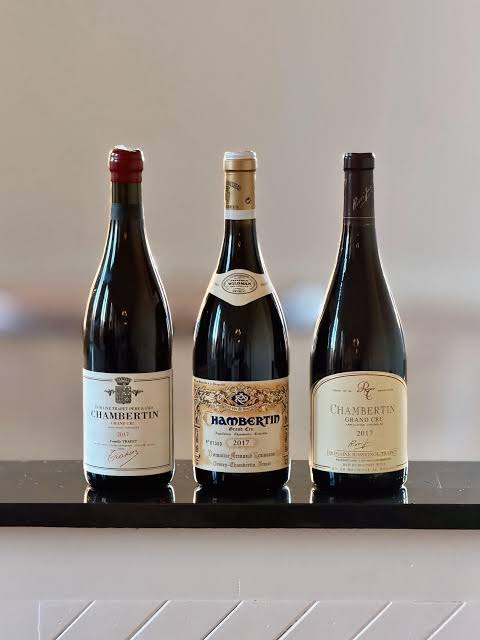
Rousseau’s Chambertin Grand Cru is the best wine for investment from Gevrey-Chambertin — the most coveted single expression from an estate whose winemaking philosophy prioritises terroir transparency and longevity above all else. Production is tiny. Quality is consistent. And the secondary market for Rousseau has deepened significantly over the past five years as the global Burgundy collector base has expanded.
Explore Fine Wine Burgundy at Noir Cellars →
5. Salon Le Mesnil Blanc de Blancs 2013 — The Best Wine for Investment in Champagne
Salon 2013 is the bottle to watch: limited production, strong critic scores, and long-term ageing potential — the definition of a best wine for investment in the Champagne category. Yahoo Finance
After more than a year of declines, Champagne’s investment market showed its first signs of recovery in June 2025, with the Liv-ex Champagne 50 posting its first monthly gain in twelve months. Champagne combines brand prestige with broad global demand, strong critical reputations, and genuine scarcity in top vintages — contributing to lower volatility and strong downside protection, making it a dependable anchor for both collectors and investors. Statista
Salon is produced only in declared years from a single vineyard in Le Mesnil-sur-Oger. It is one of the smallest-production prestige Champagne expressions in the entire region. And the 2013 vintage — now fully released and at the beginning of what critics describe as a 20–30 year development trajectory — represents one of the most compelling best wine for investment positions available in Champagne at current pricing.
Our Blanc de Blancs Champagne guide → explains the full investment case for Salon and the other great Côte des Blancs producers. For the full prestige Champagne investment context, read our prestige cuvée Champagne ranking →.
Buy Salon Le Mesnil at Noir Cellars →
6. Dom Pérignon 2008 — The Most Investable Standard-Release Best Wine for Investment in Champagne
Grower Champagne proved one of the most active trading categories in 2025, with volumes skyrocketing and prices climbing — but at the Maison level, Dom Pérignon 2008 remains the single most liquid and most reliably investable standard-release expression in the market. The Rum Lab
The 2008 Dom Pérignon earned 96–100 points from every major critic. It is widely considered the finest Dom Pérignon vintage of the modern era. And as the finest vintage of the most famous Champagne brand on earth, it attracts the broadest possible collector base — the deepest secondary market liquidity of any single Champagne expression.
Our complete Dom Pérignon guide → covers the full Plénitude system, the investment case for each vintage, and the specific price data that makes 2008 the strongest current position in the Dom Pérignon range for investment buyers.
Buy Dom Pérignon at Noir Cellars →
7. Screaming Eagle Cabernet Sauvignon — The Best Wine for Investment From Napa
Screaming Eagle is a benchmark in cult wine investing. Its limited production and elite status ensure robust appreciation and investor loyalty. 2025 prices have risen by 13%, with bottles selling for up to $6,000. The Rum Lab
Screaming Eagle is the best wine for investment from Napa Valley and one of the most structurally pure investment positions in all of fine wine outside Burgundy. Approximately 850 cases annually. No retail distribution. Mailing-list-only primary access that takes years to obtain. A secondary market that has produced consistent double-digit appreciation in every meaningful vintage since the estate’s establishment.
The barriers to acquiring Screaming Eagle at primary market pricing are significant — but the secondary market provides reliable access at prices that have demonstrated consistent appreciation. For buyers seeking New World investment wine exposure with the structural characteristics of the finest European producers, Screaming Eagle is the definitive answer.
Compare against Opus One wine → — the more accessible and more liquid Napa investment position — in our dedicated guide. Browse all available expressions in our Fine Wine Napa Valley collection →.
8. Super Tuscans — The Best Wine for Investment Rising Stars
Italy’s best wines for investment come mainly from the Tuscan and Piedmont regions. While most trade is generated by the critically acclaimed Super Tuscan stars — Sassicaia, Ornellaia, and Solaia — demand for Italian wine has seen more Italian brands enter the secondary market. Statista
Among 2025’s strongest individual performers: Le Macchiole Scrio +29% over 12 months, Marion Amarone +21%, Ciacci Piccolomini Pianrosso Riserva +21%. For diversification within Italy, combining steady Super Tuscan exposure with carefully chosen Piedmont parcels can balance liquidity with potential upside. Statista
Super Tuscans represent the best wine for investment opportunity in Italy — underpriced relative to equivalent quality Burgundy and Bordeaux, with rapidly growing global secondary market depth, and a critical establishment that has consistently awarded 97–100 points to the finest expressions.
Sassicaia and Ornellaia in the benchmark 2016 and 2019 vintages are the most liquid entry points. Both are available in our Fine Wine collection →.
9. Krug Grande Cuvée (Older Editions, Magnum Format) — The Overlooked Best Wine for Investment
Champagne investment activity was driven by consumption, portfolio rebalancing, and selective value-led buying in 2025 — with liquidity flowing to wines that offered trust, familiarity, and ease of exit. Krug Grande Cuvée consistently appears at the top of secondary market confidence ratings. The Rum Lab
Krug Grande Cuvée in Magnum format — specifically older Editions from the 163ème through 169ème — is one of the most consistently overlooked best wine for investment positions in the entire Champagne market. The combination of Krug’s established secondary market position, the large-format ageing advantage, and the Edition numbering system that now allows buyers to track composition creates a secondary market dynamic that rewards patient, informed buying.
Our complete Krug Grande Cuvée guide → covers the Edition system in full, the specific Magnums to target, and the investment case relative to other prestige Champagne expressions.
10. Chapoutier Le Pavillon 2008 — The Best Wine for Investment Dark Horse of 2025
The clear leader of 2025 investment performance: Chapoutier’s Le Pavillon 2008 surged almost 40% year-on-year, with the average price jumping from £917 to £1,271. The Rhône has often been viewed as undervalued compared to Burgundy, and this result suggests collectors are recognising the potential of top Hermitage wines. GlobeNewswire
Chapoutier Le Pavillon is a Syrah-based Hermitage — produced from a single Grand Cru site in the Northern Rhône that has been cultivated by the Chapoutier family for over 200 years. It is the highest-performing investment wine of 2025 by percentage return — and it reflects a broader truth about the best wine for investment landscape: the Rhône Valley, consistently overlooked in favour of Burgundy and Bordeaux, contains expressions of comparable terroir quality and ageing potential at a fraction of the collector premium.
Explore our Fine Wine collection at Noir Cellars →
The Best Vintages to Buy for Investment Wine in 2025
If you want one core vintage anchor for Bordeaux exposure in 2025, 2016 is the workhorse — especially as prices have softened. Among the most investable modern classics, Left Bank 2016 remains a reference point for balance, precision, and longevity. Burgundy 2020 reds can be concentrated yet poised, while Tuscany 2020 offers ripe, polished profiles. In Burgundy, mature whites and select 2019–2020 reds offer particularly disciplined buying opportunities. Statista
Best investment vintages by region right now:
| Region | Priority Vintages | Why |
|---|---|---|
| Bordeaux Left Bank | 2016, 2019, 2010 (secondary) | Softened prices, 97–100 point quality, decades of runway |
| Burgundy Red | 2018, 2019, 2020 | Strong quality, prices below peak, growing secondary liquidity |
| Burgundy White | 2017, 2019 | Mature whites now at value entry points |
| Champagne | 2008, 2013 | Critical consensus established, drinking windows opening |
| Tuscany | 2016, 2015 | Consistent secondary market performer, growing Asian demand |
| Napa Valley | 2018, 2019 | Best modern vintages with confirmed quality trajectories |
What to Avoid When Buying the Best Wine for Investment
Understanding what does not qualify as the best wine for investment is as important as knowing what does. Common mistakes that destroy investment returns:
Buying on brand recognition without vintage analysis. A famous label in a mediocre vintage is not the best wine for investment — it is a premium brand in a compromised bottle. The finest investment returns consistently come from benchmark vintages in established producers. Ordinary vintages from famous estates typically underperform.
Ignoring provenance. Provenance and condition now directly impact investment-grade status and resale value. Only buy from trusted sources with full traceability. A bottle of the best wine for investment without documented storage history is worth meaningfully less on the secondary market than the identical wine with a clean, continuous cold-chain record. Yahoo Finance
Choosing individual bottles over case format. Case-format best wine for investment positions command 15–25% secondary market premiums over equivalent individual bottles. For every investment wine purchase, specify OWC (Original Wooden Case) format where available.
Expecting short holding periods to deliver significant returns. Plan for 5–10+ years minimum. Liquidity varies, but blue-chip Bordeaux can require 10–20 years to peak. Super Tuscans and Champagne often realise value earlier, but shorter holds increase friction and pricing risk. Statista
For the complete framework on identifying, buying, and storing investment wine — including budget guidance, diversification principles, and tax considerations — read our investment grade wine buying guide →.
How to Buy the Best Wine for Investment Online: The Non-Negotiable Standards
Every best wine for investment purchase — regardless of region, producer, or vintage — requires the same rigorous approach.
Source from authorised specialist retailers only. The best wine for investment cannot be purchased from generalist online marketplaces without provenance risk. Noir Cellars sources all investment wine through authorised fine wine merchant channels with full documentation.
Insist on temperature-controlled storage and shipping. The best wine for investment exposed to heat — even briefly during transit — loses the structural integrity that secondary market buyers pay for. Every Noir Cellars order ships in thermally insulated specialist packaging with full insurance cover.
Request complete provenance documentation at purchase. Purchase invoices, storage records, and OWC integrity are the documentation that secondary market buyers require. At Noir Cellars, every investment wine purchase includes complete provenance documentation.
Browse the complete Noir Cellars fine wine collection → for all the best wine for investment expressions covered in this guide — Bordeaux, Burgundy, Champagne, Italy, and Napa Valley — with full provenance, temperature-controlled storage, and insured worldwide delivery. Contact our concierge team at concierge@noircellars.com for bespoke investment wine portfolio guidance.
Frequently Asked Questions
What is the best wine for investment in 2025?
The best wines for investment in 2025 combine proven secondary market liquidity, strong critic scores, limited production, and prices that have corrected from 2022 peaks — creating genuine value entry points for patient investors. The top ten best wine for investment positions in 2025 are DRC, Pétrus, Bordeaux First Growths, Domaine Armand Rousseau, Salon Le Mesnil, Dom Pérignon 2008, Screaming Eagle, Super Tuscans, Krug Grande Cuvée Magnum, and Chapoutier Le Pavillon — all available through our fine wine collection →. Statista
Is 2025 a good time to buy wine for investment?
Yes. 2025 remains a buyer’s market after a multi-year correction. Returns will be driven by selectivity on region, producer, and vintage, combined with provenance and longer holding periods. The rare, high-cost bottles that represent the best wine for investment have declined at a slower rate than newer and less prestigious wines — creating compelling entry points. Our investment grade wine guide → provides the complete framework for buying now. Statista
Which region produces the best wine for investment?
Burgundy produces the best wine for investment by return ceiling — DRC and the top Grand Cru Domaines have delivered 500%+ appreciation over decade-long holding periods in the finest vintages. Bordeaux produces the best wine for investment by secondary market liquidity and portfolio safety. Champagne produces the best wine for investment by downside protection and accessibility. Read our Bordeaux First Growth guide →, Dom Pérignon guide →, and Pétrus price guide → for category-specific analysis.
How much should I spend on investment wine?
Practically, £5,000–£25,000 builds a diversified starter portfolio of the best wine for investment. Entry positions in the most accessible best wine for investment tier — Taittinger Comtes de Champagne, Château Haut-Brion, Ornellaia — begin from approximately $200–$650 per bottle. Case-format Bordeaux First Growth investment positions begin from approximately $6,000–$8,000 per case. Contact concierge@noircellars.com for a bespoke portfolio proposal. Statista
How long should I hold investment wine for the best returns?
Blue-chip Bordeaux can require 10–20 years to peak. Super Tuscans and Champagne often realise value earlier. Shorter holds increase friction and pricing risk. The best wine for investment returns compound over time — five years represents an absolute minimum holding period, with 10–15 years delivering the most consistent and significant appreciation across all major fine wine categories. Statista
Where can I buy the best wine for investment online?
Noir Cellars stocks the best wine for investment across every major region — Bordeaux, Burgundy, Champagne, Italy, and Napa Valley — with full provenance documentation, temperature-controlled storage from receipt, and insured worldwide delivery. Visit noircellars.com/fine-wine → or contact our concierge team at concierge@noircellars.com for bespoke guidance on building a best wine for investment portfolio matched to your specific budget and timeline.
Build your best wine for investment portfolio at Noir Cellars — DRC, Pétrus, Bordeaux First Growths, Salon, Dom Pérignon, and the world’s finest investment grade expressions, with full provenance, temperature-controlled storage, and insured worldwide delivery. Visit noircellars.com/fine-wine or contact concierge@noircellars.com.