Wine Category
Investment Grade Wine: The Fearless Collector’s Guide to Buying Bottles That Build Wealth

Jul
Investment Grade Wine: The Fearless Collector’s Guide to Buying Bottles That Build Wealth
Most alternative assets are abstract. A gold ETF is a number on a screen. A commodity futures contract is a document representing something you will never touch. A fine art piece sits in a vault, inaccessible, generating no sensory return on the capital locked inside it.
Investment grade wine is different. It sits in a temperature-controlled cellar, aging slowly, building complexity every single year. It appreciates in value as each passing vintage consumes some of the finite supply. And if the investment thesis does not play out exactly as planned — if the market moves sideways for a year or the drinking window arrives before the sale does — there is always one deeply satisfying exit strategy available that no other alternative asset class can offer: open the bottle.
Fine wine has delivered impressive returns over the past two decades, with the Liv-ex Fine Wine 1000 index growing by 270.7% between 2001 and 2021 — marginally outperforming the S&P 500 at 262% over the same period. More recently, despite market corrections in 2024–2025, wine prices in early 2026 are showing signs of recovery — with industry experts noting that current prices represent attractive entry points for patient investors. The Rum Lab
This is the complete guide to investment grade wine in 2025 — what it is, what qualifies as truly investment grade wine versus premium drinking wine, which bottles and regions to prioritise, how to build a portfolio from scratch at any budget level, and exactly where to buy with the provenance and storage standards that protect both the wine and the return.
What Investment Grade Wine Actually Means: The Definition That Matters
The phrase investment grade wine is used loosely in the wine world — applied to everything from a $30 bottle of Côtes du Rhône to a $10,000 case of DRC. Understanding what genuinely qualifies as investment grade wine separates the bottles that build wealth from the bottles that merely taste expensive.
Investment grade wines represent less than 1% of global wine production and share key traits: ageing potential, prestigious origins, strong vintages, and proven price appreciation. The wines you enjoy drinking and the wines that deliver the best returns are often very different — separating your palate from your portfolio is critical for investment success. The Rum Lab
True investment grade wine satisfies all five of the following criteria simultaneously. Remove any one of them and the investment case weakens significantly.
Criterion 1 — Demonstrable ageing potential. Investment grade wine must improve over decades in the bottle — not merely survive storage, but actively develop complexity and quality. Wines that peak at 3–5 years from vintage cannot build the supply scarcity and quality development that drives secondary market appreciation. The finest investment grade wine expressions — Pétrus, DRC, Krug Grande Cuvée, Château Margaux — are built for 20–50 year drinking windows.
Criterion 2 — Proven secondary market liquidity. Investment grade wine must be actively traded on the secondary market, with a sufficient buyer pool to allow exit positions without significant price concessions. A wine that nobody trades is not investable regardless of its intrinsic quality. The deepest secondary market liquidity for investment grade wine sits in Bordeaux First Growths, top Burgundy domaines, prestige Champagne, and a handful of Italian and Napa Valley cult producers.
Criterion 3 — Critical consensus at 94 points or above. Investment grade wine requires validation by the world’s major critics — Wine Advocate, Wine Spectator, Decanter, Vinous, James Suckling. Consistent scores of 94+ across independent reviewers create the buyer confidence that underpins secondary market pricing. A single 100-point score from Robert Parker has historically driven double-digit secondary market price appreciation within months of publication.
Criterion 4 — Scarcity that cannot be manufactured. The finest investment grade wine comes from small, defined parcels of exceptional terroir that cannot be expanded. Pétrus’s 11.4 hectares of blue clay in Pomerol. The 1.8-hectare DRC monopole in Vosne-Romanée. Le Mesnil-sur-Oger’s Grand Cru chalk plateau that produces Salon. These are geological accidents — unrepeatable and irreplaceable — and their wines command investment grade premiums because their supply ceiling is fixed by geography, not commercial decision.
Criterion 5 — Global collector demand that transcends regional preferences. Investment grade wine must be sought by collectors across multiple continents — generating the cross-border demand that creates competitive secondary market pricing. International demand, especially from Dubai, Singapore, and Hong Kong, continues to shape investment grade wine market pricing. The most reliable investment wines of 2025 share a few common traits: global demand, trusted provenance, limited production, and a strong critical track record. IWSR
The Investment Grade Wine Market in 2025: Where the Opportunity Sits
The fine wine market grew by 7.2% globally in 2024, according to the Liv-ex Fine Wine Market Report. Bordeaux wines represent 40% of global fine wine trade, followed by Burgundy at 25% and Champagne at 15%. The average annual return on investment grade wine has consistently ranged between 8% and 12%, depending on the vintage and provenance. GlobeNewswire
The investment grade wine market in 2025 sits at a genuinely interesting inflection point. The market correction of 2024–2025 saw some investment grade wine categories decline 15–20% from peak prices — but wine prices in early 2026 are showing signs of recovery, with industry experts noting that current prices represent attractive entry points for patient investors. The Rum Lab
Tom Gearing, co-founder and CEO of Cult Wines, says: “Fine wine prices are approaching a five-year low.” That’s about half the release price of some 2022 expressions. But because the 2024 harvest in France was the smallest in modern times, future supply will be squeezed, pushing prices back up. Matthew O’Connell, CEO of LiveTrade and head of investment at Bordeaux Index, sees the price dip in Burgundies and grower Champagne as a big opportunity — some almost impossible-to-obtain Grands Crus can now be had at prices lower than they were two years ago. Insightaceanalytic
The practical implication for buyers approaching investment grade wine in 2025: the correction that removed the froth from the 2021–2022 market has created entry points across multiple categories that may not be available again for years. Patient buyers with 5–15 year horizons are looking at one of the more compelling investment grade wine buying environments of the decade.
Investment Grade Wine by Region: The Complete 2025 Breakdown
Bordeaux — The Bedrock of Investment Grade Wine
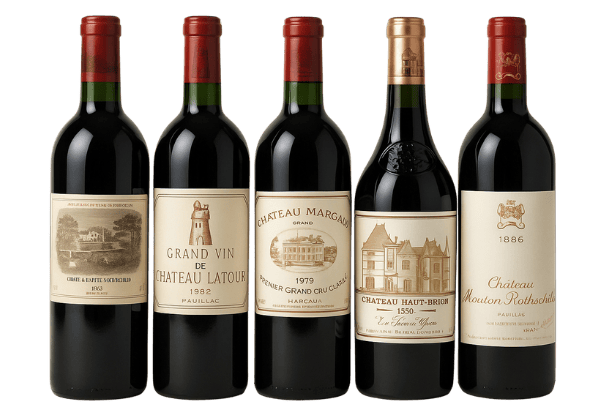
Bordeaux remains a dominant force in investment grade wine. First Growths like Château Lafite Rothschild, Château Latour, and Château Margaux continue to command high demand, especially from buyers in Asia and the Middle East. The 2010, 2016, and 2019 vintages are particularly strong candidates for investment grade wine portfolios. IWSR
Bordeaux is the foundation of any serious investment grade wine portfolio — not because it is the only option, but because it is the most liquid, the most globally understood, and the most extensively documented in terms of historical price performance. The Bordeaux investment grade wine market is the deepest and most transparent in fine wine.
The investment grade wine hierarchy within Bordeaux:
Tier 1 — The Five First Growths: Château Margaux, Château Lafite Rothschild, Château Latour, Château Mouton Rothschild, and Château Haut-Brion represent the safest, most liquid investment grade wine positions in the category. A case of Château Lafite Rothschild 2010 purchased en primeur for around $7,000 is now valued at over $14,000 — doubling its investment value in just over a decade. Statista
Tier 2 — Right Bank Icons: Pétrus, Le Pin, Cheval Blanc — not classified under the 1855 system but commanding comparable or higher investment grade wine premiums. Our dedicated Pétrus wine price guide → covers the complete investment case for the most expensive investment grade wine produced in Pomerol.
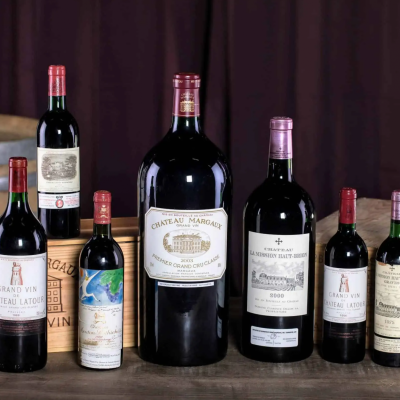
Best current entry points: The 2016 Château Margaux at approximately $950 per bottle represents outstanding investment grade wine value at current market pricing — a 98–100 point wine with a drinking window through 2050, purchased at prices below their 2022 peak. Explore the complete range in our Bordeaux First Growth buyer’s guide → and our Fine Wine Bordeaux collection →.
Burgundy — The Highest-Ceiling Investment Grade Wine Category
In 2012, Domaine Armand Rousseau Chambertin Grand Cru, vintage 2010, was released at £5,000 a case. Ten years later it was selling for more than £60,000 — a 1,100% increase. That single data point explains why serious investment grade wine collectors allocate significant capital to Burgundy. Insightaceanalytic
Burgundy investment grade wine operates on different logic to Bordeaux. Production volumes are smaller, vintage variation is more dramatic, and the quality hierarchy — Village, Premier Cru, Grand Cru — creates a more complex buying landscape. But the ceiling on Burgundy investment grade wine appreciation, when the right producer and the right vintage align, exceeds any other category in fine wine.
With outstanding terroirs and excellent producers, Burgundy produces investment grade wine bottles that command monumental prices in the global wine market. Statista
The investment grade wine hierarchy within Burgundy:
The pinnacle: Domaine de la Romanée-Conti (DRC) — all expressions, all vintages. Production is tiny across the entire range. Secondary market demand is global and deep. Investment grade wine returns on DRC have outperformed every other fine wine producer over 10-year holding periods in multiple analysis periods.
The next tier: Domaine Leroy, Domaine Armand Rousseau, Domaine Georges Roumier, Henri Jayer (increasingly rare and astronomically priced at auction) — these are the investment grade wine producers whose finest Grand Cru expressions regularly deliver 500%+ appreciation over decade-long holding periods.
The accessible investment grade wine entry: Gevrey-Chambertin Premier Cru from quality producers, Pommard Premier Cru, Chambolle-Musigny Village from the best domaines — these represent investment grade wine positions at $80–$250 per bottle that offer real appreciation potential without requiring six-figure capital deployment.
Champagne — The Rising Investment Grade Wine Category
Champagne’s presence in the investment grade wine market is led by Dom Pérignon, Louis Roederer, and Krug. Offering solid pricing, availability, and wide distribution, Champagne has managed to provide accessibility and steady returns for investment grade wine investors. Statista
From January to September 2022, a case of 2012 Salon Le Mesnil Champagne soared 232% — from $4,670 to $15,485. That trajectory — extraordinary in its speed — reflects the structural investment grade wine case for prestige Champagne: tiny production against global collector demand, extraordinary ageing potential, and a secondary market that is deepening as more serious investors recognise the category. Insightaceanalytic
The most compelling investment grade wine positions in Champagne in 2025:
- Salon Le Mesnil — Salon 2013 is cited as a bottle to watch: limited production, strong critic scores, and long-term ageing potential — the definition of investment grade wine in the Champagne category. Explore our Blanc de Blancs Champagne guide → for the full Salon context. IWSR
- Dom Pérignon — particularly the 2008 vintage and P2 expressions. Our complete Dom Pérignon guide → covers the full investment grade wine case for the world’s most famous Champagne.
- Krug Grande Cuvée in Magnum — read our Krug guide → for why the Magnum format consistently outperforms standard bottles on the secondary market.
Browse our full prestige Cuvée Champagne ranking → for the complete investment grade wine case across every major Champagne house.
Italy — The Fast-Growing Investment Grade Wine Frontier
Italy’s investment grade wines come mainly from the Tuscan and Piedmont regions. While most trade is generated by the critically acclaimed Super Tuscan stars — Sassicaia, Ornellaia, and Solaia — demand for Italian wine has seen more Italian brands enter the secondary market. Statista
Italian investment grade wine is, in 2025, the most dynamic growth segment in the secondary market. Sassicaia, Ornellaia, and Solaia from Tuscany are now firmly established as investment grade wine with deep secondary market liquidity. The great Barolo producers — Giacomo Conterno, Bruno Giacosa, Gaja — are following the same trajectory into the investment grade wine tier.
The investment grade wine case for Italian wine: consistently underpriced relative to equivalent Burgundy and Bordeaux expressions, rapidly growing global collector demand, and a critical establishment that has awarded 97–100 point scores to the finest expressions for two consecutive decades.
Napa Valley — The American Investment Grade Wine Leader
An investment grade wine with exceptional returns: Screaming Eagle Cabernet Sauvignon 2012 at $5,304 per bottle — produced from Cabernet Sauvignon, Merlot, and Cabernet Franc in tiny quantities from the Oakville AVA. Statista
The Napa Valley investment grade wine tier is led by three producers with genuinely collectible secondary market profiles: Screaming Eagle, Harlan Estate, and Opus One. Our dedicated Opus One wine guide → covers the complete investment case for the most globally recognised American investment grade wine — the most liquid and reliably tradeable of the three.
Screaming Eagle represents the most purely investment grade wine proposition in Napa: approximately 850 cases annually, no retail distribution, mailing-list-only primary access, and secondary market prices that have appreciated consistently across every benchmark vintage.
Explore all available Napa Valley investment grade wine in our Fine Wine Napa Valley collection →.
Whisky — The Alternative Investment Grade Wine Tier
The definition of an investment grade wine portfolio is expanding. High-value spirits, especially Japanese whiskies and rare single malts, are now part of the broader investment conversation. Brands like Macallan Red Collection, Karuizawa, and Hibiki 21 are attracting savvy collectors. Important note: provenance and storage conditions are critical — only buy from trusted sources with full traceability. IWSR
For collectors building a broader alternative asset portfolio beyond investment grade wine specifically, the premium whisky market now offers similar structural characteristics: limited production, growing global demand, excellent storage simplicity relative to wine, and a secondary market with demonstrably growing depth. Browse our complete Whisky collection → for Macallan 18, 25, and 30, and our Scotch Single Malt range → for investment grade spirit positions alongside wine.
How to Build an Investment Grade Wine Portfolio: The Step-by-Step Framework
Building a genuine investment grade wine portfolio — one that delivers real financial returns alongside the pleasure of owning extraordinary bottles — requires a systematic approach rather than a series of impulse purchases.
Step 1 — Define Your Budget and Timeline
Investment grade wine returns compound over time. For the best gains, you really have to wait. Hold for at least 3 years, preferably 5 to 15, when enough bottles have been drunk to lower the supply, thus increasing prices. Insightaceanalytic
Minimum meaningful investment grade wine portfolio sizes by tier:
- Entry level: $5,000–$15,000 — 6–12 bottles from the most accessible investment grade wine tier (Bordeaux Second Growths, Burgundy Village and Premier Cru, prestige Champagne NV)
- Mid-tier: $15,000–$50,000 — case-format First Growth Bordeaux and top Burgundy, prestige vintage Champagne
- Serious portfolio: $50,000+ — full diversification across Bordeaux, Burgundy, Champagne, and Italian investment grade wine with Magnum and OWC format where available
Step 2 — Prioritise Case Format Over Individual Bottles
Stick to investment grade wines stored in bond and in original wooden cases for maximum resale potential. Case-format investment grade wine commands secondary market premiums of 15–25% over equivalent individual bottles and provides the provenance integrity that serious buyers require. For every investment grade wine purchase at Noir Cellars, we recommend specifying OWC (Original Wooden Case) format. IWSR
Step 3 — Diversify Across Regions and Vintages
A properly diversified investment grade wine portfolio spans multiple regions, multiple producers, and multiple vintages. Concentration in a single estate or vintage creates unnecessary risk — the investment grade wine market occasionally reassesses specific positions, and diversification provides the portfolio resilience to absorb individual underperformers.
Recommended investment grade wine portfolio allocation:
- Bordeaux First Growth: 35–40%
- Burgundy Grand Cru and Premier Cru: 25–30%
- Prestige Champagne: 15–20%
- Italian Super Tuscan and Barolo: 10–15%
- Napa Valley cult Cabernet: 5–10%
Step 4 — Prioritise the Correct Vintages
Not all vintages produce investment grade wine — and the premium allocated to great vintages over good ones reflects real quality differences that the secondary market consistently prices in. The average annual return on investment grade wine has consistently ranged between 8% and 12%, depending on the vintage and provenance. Great vintage investment grade wine consistently outperforms the benchmark; ordinary vintages typically underperform. GlobeNewswire
Current best-buy investment grade wine vintages across regions:
- Bordeaux: 2016, 2019, 2010 (secondary market)
- Burgundy: 2018, 2019, 2015
- Champagne: 2008 (secondary market), 2013
- Italy: 2016, 2015, 2013
- Napa Valley: 2018, 2019
Step 5 — Store and Insure Properly
Investment grade wine stored in undocumented home conditions loses provenance value and is worth meaningfully less on the secondary market than the same wine with a complete temperature-controlled storage record. Fine wine has historically shown low correlation with traditional financial markets. During the 2008 financial crisis, wine prices dipped briefly but recovered faster than equities with less volatility — making investment grade wine a useful tool for reducing overall portfolio risk. Protect that resilience by storing investment grade wine professionally. The Rum Lab
All Noir Cellars investment grade wine is stored in our own temperature-controlled facilities from receipt and shipped with full insurance cover. Contact concierge@noircellars.com for bespoke investment grade wine portfolio guidance, case-quantity pricing, and storage documentation.
Tax Considerations for Investment Grade Wine
In many countries, fine wine is classified as a wasting asset — meaning it is exempt from capital gains tax. This makes investment grade wine an attractive option for high-net-worth individuals looking to grow their wealth efficiently. Statista
In the UK, investment grade wine held outside a bond may be subject to capital gains tax on disposal. Wine held in a bonded warehouse — purchased in-bond and sold in-bond — may qualify for wasting asset CGT exemption. Always consult a qualified tax adviser before making significant investment grade wine purchases with tax efficiency as a primary objective. Tax treatment varies significantly by jurisdiction.
Where to Buy Investment Grade Wine Online: The Non-Negotiable Standards
Every investment grade wine purchase requires the same rigorous standards — regardless of which region, which producer, or which vintage.
Full provenance documentation. Purchase invoices, storage records, and OWC integrity are non-negotiable for investment grade wine. Without documentation, resale value is compromised. At Noir Cellars, every investment grade wine purchase includes complete provenance documentation.
Temperature-controlled storage from receipt. Investment grade wine exposed to temperature fluctuation during storage or transit loses the structural integrity that makes it worth buying. Our investment grade wine inventory has been stored in specialist facilities from the day of receipt.
Authorised supply chain. Investment grade wine sourced outside authorised channels cannot carry the provenance guarantees that secondary market buyers require. Noir Cellars sources all investment grade wine through established fine wine merchant relationships with full traceability.
Browse our complete investment grade wine collection at Noir Cellars → — Bordeaux, Burgundy, Champagne, and Napa Valley, with full provenance, temperature-controlled storage and insured worldwide delivery. Contact concierge@noircellars.com for bespoke portfolio guidance.
Frequently Asked Questions
What is investment grade wine?
Investment grade wines represent less than 1% of global wine production and share key traits: ageing potential, prestigious origins, strong vintages, and proven price appreciation. True investment grade wine satisfies five criteria simultaneously: demonstrable ageing potential, proven secondary market liquidity, critical scores of 94+, structural scarcity from limited irreplaceable terroir, and global collector demand that transcends any single market. Explore our complete fine wine collection → for investment grade wine across all major regions. The Rum Lab
What returns does investment grade wine deliver?
The average annual return on investment grade wine has consistently ranged between 8% and 12%, depending on vintage and provenance. The Liv-ex Fine Wine 100 index grew by 270.7% between 2001 and 2021 — marginally outperforming the S&P 500 at 262% over the same period. Individual investment grade wine positions have significantly outperformed these benchmarks — a case of Château Lafite Rothschild 2010 purchased en primeur for around $7,000 is now valued at over $14,000. Alcohol E-Commerce Market Analysis Report 2026: $161.4 Bn Market Opportunities, Trends, Competitive Landscape, Strategies, and Forecasts, 2020-2025, 2025-2030F, 2035F +2
Which investment grade wine regions offer the best returns in 2025?
Current conditions see the price dip in Burgundies and grower Champagne as a significant opportunity — some Grands Crus can now be had at prices lower than two years ago, representing compelling investment grade wine entry points. Bordeaux First Growths and prestige Champagne offer the most reliable long-term investment grade wine returns; Burgundy Grand Cru offers the highest ceiling but requires specialist knowledge. Browse our Bordeaux First Growth guide →, Dom Pérignon guide →, and Pétrus price guide → for category-specific analysis. Insightaceanalytic
How much do I need to start an investment grade wine portfolio?
A meaningful investment grade wine portfolio can begin from $5,000–$10,000 for an entry-level diversified collection of 6–12 bottles from the most accessible investment grade wine tier. Serious investment grade wine portfolios with case-format First Growth Bordeaux and Grand Cru Burgundy require $50,000+. Contact concierge@noircellars.com for a bespoke investment grade wine proposal matched to your specific budget and timeline.
What format should I buy investment grade wine in?
Always prioritise Original Wooden Case (OWC) format where available. Provenance and condition now directly impact investment grade wine status and resale value — only buy from trusted sources with full traceability. Case-format investment grade wine commands 15–25% secondary market premiums over equivalent individual bottles and provides the documentation that serious buyers require. IWSR
Is investment grade wine subject to capital gains tax?
Tax treatment varies by jurisdiction and holding structure. In many countries, fine wine is classified as a wasting asset — meaning it may be exempt from capital gains tax. Always consult a qualified tax adviser before making significant investment grade wine purchases with tax efficiency as a primary objective. Statista
Where can I buy investment grade wine online with guaranteed provenance?
Noir Cellars stocks investment grade wine across Bordeaux, Burgundy, Champagne, Italy, and Napa Valley — with full provenance documentation, temperature-controlled storage from receipt, and insured worldwide delivery. Visit noircellars.com/fine-wine → or contact our concierge team at concierge@noircellars.com for bespoke investment grade wine portfolio guidance.
Build your investment grade wine portfolio at Noir Cellars — Bordeaux First Growths, Grand Cru Burgundy, prestige Champagne, and Napa Valley cult Cabernet, all with full provenance documentation, temperature-controlled storage, and insured worldwide delivery. Visit noircellars.com/fine-wine or contact concierge@noircellars.com.