Champagne Category
Blanc de Blancs Champagne: The Purest, Most Misunderstood Style in All of Champagne
Jun
Blanc de Blancs Champagne: The Purest, Most Misunderstood Style in All of Champagne
There is a style of Champagne that sommeliers order for themselves when nobody is watching.
Not the famous gold bottle. Not the label every guest will recognise from across the room. Not the prestige cuvée that communicates occasion before the cork is even drawn. What serious wine professionals consistently reach for — at their own tables, at the end of their own shifts, with their own money — is Blanc de Blancs Champagne.
And most people who drink Champagne regularly have never tried it.
Blanc de Blancs Champagne is not a marketing category invented to segment the market. It is the most technically demanding, most terroir-specific, most intellectually revealing style that Champagne produces — a wine made exclusively from white grapes that strips away everything the Champagne region uses to add richness, body, and crowd-pleasing generosity, leaving only the naked truth of the chalk beneath it. By stripping away the structural power of Pinot Noir and the fruit-forward charm of Meunier, the winemaker is left with the naked elegance of Chardonnay. It is a style that demands perfection — there is no place for flaws to hide behind a blend. Instead, we find the purest expression of the Champagne region’s chalky terroir: vibrant acidity, citrus precision, and that unmistakable saline minerality. The Rum Lab
This is your complete guide to Blanc de Blancs Champagne — what it is, why it matters more than most buyers realise, which bottles define the category, how to taste it properly, and exactly where to buy the finest expressions available.
What Blanc de Blancs Champagne Actually Means
Start with the translation. Blanc de Blancs means white from whites — a white wine made exclusively from white grape varieties, as opposed to the far more common Champagne style that blends white and black grapes together.
The term Blanc de Blancs designates wines in which there are no black grape varieties. One or more white grape varieties such as Chardonnay — of course — but also Arbane, Petit Meslier, Pinot Blanc, or Pinot Gris are included in the blend. This style of Champagne is light to taste and all about finesse. They are bright, refreshing wines, whose liveliness comes as a pleasant surprise to palate and taste buds. They are expressions of the chalky terroirs responsible for their creation — typified by a sensation that is hard to describe, referred to as minerality. The Rum Lab
In practice, the overwhelming majority of Blanc de Blancs Champagne is made from 100% Chardonnay. The other permitted white varieties — Arbane, Petit Meslier, Pinot Blanc, Pinot Gris — appear in tiny quantities and are used by a handful of specialist producers pursuing historic or experimental expressions of Blanc de Blancs Champagne. For every bottle of Blanc de Blancs Champagne you are likely to encounter, Chardonnay is the sole ingredient.
This matters because Chardonnay is a variety of extraordinary transparency. It expresses soil, climate, and winemaking decisions with more fidelity than almost any other grape variety in the world. In Burgundy, Chardonnay is the vehicle through which the differences between Meursault and Puligny-Montrachet — villages separated by metres of geological strata — become legible in the glass. In Champagne, Blanc de Blancs Champagne performs the same function: it makes the chalk speak.
Understanding Blanc de Blancs Champagne means understanding Chardonnay — and understanding Chardonnay means understanding what chalk, limestone, and the cool northern climate of Champagne do to a grape variety that, grown elsewhere, produces something completely different.
The Côte des Blancs: Where the Greatest Blanc de Blancs Champagne Is Born
You cannot discuss Blanc de Blancs Champagne seriously without discussing the Côte des Blancs — the 25-kilometre strip of east-facing chalk hillside south of Épernay that is, by universal critical consensus, the finest Chardonnay-growing terroir on earth.
The geology of the Côte des Blancs is the reason Blanc de Blancs Champagne tastes the way it does. Beneath a thin layer of topsoil lies a continuous bed of Belemnite chalk — pure white, ancient marine sediment laid down 70 million years ago, with a porosity that drains excess water while retaining enough moisture to keep vines alive through dry summers. The chalk also reflects heat upward into the vine canopy, extending the ripening season and developing complexity in the fruit without the sugar concentration that warmer climates force.
The result is Chardonnay of extraordinary precision — high natural acidity, restrained sugar levels, and a mineral character that no other terroir in the world replicates. When this fruit is made into Blanc de Blancs Champagne with skill and patience, the wine that emerges tastes of its specific location in ways that surprise even experienced wine drinkers. A Blanc de Blancs Champagne from Le Mesnil-sur-Oger — the village at the southern end of the Côte des Blancs, on some of the purest chalk in the region — tastes measurably different from a Blanc de Blancs Champagne made two kilometres away in Oger or Avize. The chalk is the same. But the angle of the slope, the depth of the topsoil, and the microclimate of each parcel create differences that Blanc de Blancs Champagne renders audible.
The Grand Cru villages of the Côte des Blancs — Avize, Cramant, Oger, Le Mesnil-sur-Oger, and Oiry — are the most important addresses in Blanc de Blancs Champagne. Any bottle sourced from these villages deserves serious attention.
Blanc de Blancs Champagnes remain in demand and are fantastic from areas like the Côte des Blancs — but the finest Blanc de Blancs are by no means confined to that region. Standouts such as Ulysse Collin Les Enfers NV from the Coteaux du Petit Morin and Jacques Lassaigne Clos Sainte-Sophie 2018 from Montgueux highlight the breadth and brilliance of Chardonnay across the entire Champagne appellation. IWSR
Blanc de Blancs Champagne Tasting Notes: What to Expect in the Glass
Blanc de Blancs Champagne has a sensory profile unlike any other Champagne style — and knowing what to look for transforms the experience of drinking it from pleasant to revelatory.
A high-quality Blanc de Blancs Champagne reveals itself through its fine, lasting mousse, lively and fresh attack, and subtle balance of freshness, roundness, and aromatic complexity. Citrus, white fruit, and floral notes are supported by the terroir’s minerality. The finish is long and refined, reflecting both craftsmanship and the excellence of the raw material. Joe Bates
The complete Blanc de Blancs Champagne flavour architecture, stage by stage:
The mousse: Blanc de Blancs Champagne typically shows the finest, most persistent mousse of any Champagne style. The high natural acidity of Chardonnay supports smaller, longer-lasting bubbles that create a creamy, almost weightless texture in the mouth — a sensation described by serious tasters as more akin to mineral water than wine.
The nose: Blanc de Blancs Champagne opens with notes of white flowers — lime blossom, rose, and violet. Minerality is expressed in the bouquet through chalky aromas on the nose and saline notes on the palate, reminiscent of the sea. In younger expressions, green apple, lemon curd, and white peach dominate. In aged Blanc de Blancs Champagne, the primary fruit gives way to toasted almond, brioche, honey, preserved citrus, and the famous gunflint note — a struck-flint mineral signature that no other wine style produces with the same intensity. The Rum Lab
The palate: The defining characteristic of Blanc de Blancs Champagne on the palate is tension — the taut interplay between acidity and fruit that creates a sensation of precision and length that rounder, more Pinot Noir-driven Champagnes do not produce. The finish of a great Blanc de Blancs Champagne is notably long, mineral, and dry — often carrying a saline or chalky aftertaste that lingers pleasantly for minutes.
The evolution: Blanc de Blancs Champagne is among the most age-worthy styles in all of sparkling wine. The same high acidity that makes it feel austere in youth becomes the structural backbone for decades of development. Only time can unlock the profound, honeyed, and toasted dimensions that make Chardonnay the true king of the cellar. A Blanc de Blancs Champagne opened at 15 or 20 years old is a fundamentally different and — in the finest examples — more compelling experience than the same wine at 5 years. The Rum Lab
The Best Blanc de Blancs Champagne to Buy: House by House
Salon Le Mesnil Blanc de Blancs — The Pinnacle
Salon is the most uncompromising Blanc de Blancs Champagne producer in existence. One wine. One village — Le Mesnil-sur-Oger. One grape variety — Chardonnay. And produced only in years so exceptional that the house declares a vintage — which happens approximately four times per decade.
The Pierre Moncuit Extra Brut Blanc de Blancs from Le Mesnil-sur-Oger stands alongside village icons like Salon and Krug’s Clos du Mesnil — the chalky tension, minerality, and electrifying precision that define the world’s finest Blanc de Blancs, from vines tended by the same family since the late 19th century. Statista
Salon 2013 — the current release — is the finest commercially available vintage Blanc de Blancs Champagne from the Côte des Blancs. It demands patience: open it now and you will find extraordinary tension and precision; open it in 2030 and you will find the complexity that explains why collectors place it above virtually every other Blanc de Blancs Champagne ever made. Priced from $750 at Noir Cellars.
Buy Salon Le Mesnil Blanc de Blancs →
Taittinger Comtes de Champagne Blanc de Blancs — The Sommelier’s Favourite
Taittinger Comtes de Champagne is the Blanc de Blancs Champagne that wine professionals reach for when they want to show someone what the style is capable of — without asking them to spend $750 on a bottle of Salon. Dom Ruinart excelled in the Blanc de Blancs category with its exquisitely refined 2013 vintage — but Taittinger’s Comtes de Champagne remains the benchmark for prestige Blanc de Blancs Champagne at the Maison level for consistent quality across vintages. Yahoo Finance
Made exclusively from Grand Cru Chardonnay vineyards in the Côte des Blancs — the same territory that produces Salon — Comtes de Champagne Blanc de Blancs delivers a wine of extraordinary elegance: white flowers, chalk, lemon curd, hazelnut, and a long, precise finish that evolves beautifully with 10–15 years of cellaring. At its price point, this is the best-value prestige Blanc de Blancs Champagne available from a major house.
Price at Noir Cellars: from $195 | Buy Comtes de Champagne →
Krug Clos du Mesnil — The Single-Vineyard Monument
Krug Clos du Mesnil is not simply a great Blanc de Blancs Champagne — it is an argument that a single walled vineyard of 1.84 hectares in Le Mesnil-sur-Oger can produce wine of greater complexity than virtually any other site on earth. Made from 100% Chardonnay grown within the medieval stone walls of the Clos, it is the most site-specific Blanc de Blancs Champagne produced by a major Maison and one of the most collectible wines in the entire Champagne region.
The 1988 Krug Clos du Mesnil scored 99 points — one of the highest scores ever awarded to a Blanc de Blancs Champagne — serving as a reminder that while young Blanc de Blancs Champagne offers invigorating tension, only time can unlock the profound, honeyed, and toasted dimensions that make Chardonnay the true king of the cellar. The Rum Lab
Current releases start from $800 at Noir Cellars. For availability on specific vintages, contact concierge@noircellars.com.
Explore Krug at Noir Cellars → | Read our full Krug guide →
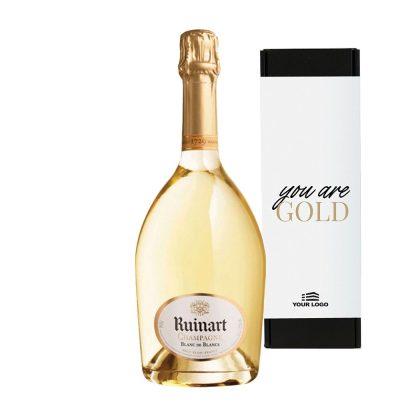
Ruinart Dom Ruinart Blanc de Blancs — The Overlooked Prestige Expression
Dom Ruinart is the Blanc de Blancs Champagne that consistently earns extraordinary critical scores while remaining less discussed than its peers — making it one of the most intelligent purchases in the prestige Blanc de Blancs Champagne category. Dom Ruinart excelled in the Blanc de Blancs Champagne category with its exquisitely refined 2013 vintage — a luminous Champagne that stands as a fitting tribute to chef de cave Frédéric Panaïotis. Yahoo Finance
Sourced from Ruinart’s Grand Cru Chardonnay parcels in the Côte des Blancs, Dom Ruinart Blanc de Blancs is a wine of remarkable purity and precision — champagne-house polish applied to the most demanding grape in the region. Consistently undervalued relative to its quality. Priced from $180 at Noir Cellars.
Buy Dom Ruinart Blanc de Blancs →
Pierre Péters Cuvée de Réserve — The Grower Entry Point
For buyers approaching Blanc de Blancs Champagne from the grower producer direction, Pierre Péters is the most important name to understand. Five generations in Le Mesnil-sur-Oger, farming Grand Cru Chardonnay parcels with the kind of obsessive attention to terroir that the village demands and so few producers sustain.
The Cuvée de Réserve NV is the entry point — an extraordinary Blanc de Blancs Champagne at an accessible price, all chalk minerality, lemon blossom, and persistent fine mousse. Les Chétillons — the single-vineyard flagship — is a collector-grade Blanc de Blancs Champagne of uncompromising precision. For our full context on how Pierre Péters fits into the grower Champagne landscape, read our grower Champagne vs Maison guide →.
Buy Pierre Péters at Noir Cellars →
Armand de Brignac Blanc de Blancs — The Silver Icon
The silver metallic bottle is the most visually striking Blanc de Blancs Champagne container produced by any major brand — and the wine inside it is the most serious expression in the Armand de Brignac range. One hundred percent Chardonnay from the Côte des Blancs, this Blanc de Blancs Champagne reveals a different dimension of the Ace of Spades house: restrained, mineral, and precise, where the Brut Gold is generous and the Rosé is sensual.
This is the Armand de Brignac expression that serious Champagne enthusiasts collect. It is also the most convincing argument that the Cattier family’s 260 years of winemaking expertise is about more than producing a culturally dominant gold bottle. For full context, read our complete Armand de Brignac guide →.
Price at Noir Cellars: from $480 | Buy Armand de Brignac Blanc de Blancs →
Billecart-Salmon Cuvée Louis Salmon Blanc de Blancs — The Dinner Table Expression
Billecart-Salmon increased their lees ageing during the Covid period — and tasting the racy vintage Blanc de Blancs Cuvée Louis Salmon 2013 demonstrates exactly why extended lees contact transforms Blanc de Blancs Champagne: the result is a wine of extraordinary tension and depth, with a purity that reflects both the Grand Cru Chardonnay fruit and the extended time on yeast. IWSR
The Cuvée Louis Salmon is the most food-forward Blanc de Blancs Champagne in this guide — built for the dinner table rather than the aperitif glass, with the weight and depth to carry through an entire meal of comparable ambition. Priced from $165 at Noir Cellars.
Buy Billecart-Salmon Louis Salmon Blanc de Blancs →
Blanc de Blancs Champagne vs Standard Champagne: The Real Difference
The most common question buyers ask when first encountering Blanc de Blancs Champagne is a simple one: how different can it actually be from a standard Champagne made with Chardonnay in the blend?
The answer is — significantly. And understanding why will change how you think about both styles permanently.
A standard NV Champagne — Veuve Clicquot, Moët Impérial, Taittinger Brut Réserve — blends Chardonnay, Pinot Noir, and Pinot Meunier together, typically in proportions of roughly 30% Chardonnay and 70% black varieties. The Pinot Noir adds body, red fruit character, and structural depth. The Meunier adds texture and immediate approachability. Together they produce a wine of generous, balanced, crowd-pleasing character that works brilliantly as an aperitif and celebration wine across a wide range of palates.
Blanc de Blancs Champagne removes all of that. No Pinot Noir richness. No Meunier softness. Just Chardonnay, making its case alone on the merits of the chalk it grew in and the skill of the winemaker who handled it. The result is a noticeably different drink: lighter in body, drier in finish, more mineral and citrus-driven in character, and — in the finest expressions — more complex, more age-worthy, and ultimately more intellectually rewarding than any blended Champagne at the same price.
Blanc de Blancs Champagne is often touted as a delicate, aperitif-style Champagne — but this tasting told a more complex story: there were broad, food-friendly examples incorporating smart oak use, sleek long-aged wines to linger over, and creamy approachable non-vintage expressions. The finest Blanc de Blancs Champagnes offer great potential for both drinking and cellaring. Insightaceanalytic
Blanc de Blancs Champagne Food Pairing: Where This Style Truly Excels
Blanc de Blancs Champagne is the most food-versatile style in all of Champagne — and the pairing possibilities extend well beyond the obvious oyster-and-fish combinations most guides recommend.
The classic pairings that always work:
- Fresh oysters and native shellfish — the saline, mineral character of Blanc de Blancs Champagne echoes the sea in the food
- Sashimi and raw fish preparations — the wine’s acidity and precision cut through fat and amplify clean, oceanic flavours
- Grilled turbot and Dover sole — the most elegant white fish demand the most elegant Champagne
- Hand-dived scallops with cauliflower — a pairing that makes both elements greater
The surprising pairings that elevate both food and wine:
- White truffle pasta — the chalky mineral notes of Blanc de Blancs Champagne create a fascinating dialogue with truffle’s earthy, musky character
- Aged hard cheeses — specifically aged Comté and Parmigiano-Reggiano, where the wine’s acidity cuts through fat while the mineral notes echo the cheese’s complexity
- Lobster bisque — the richness of the bisque brings out the toasted, brioche notes in aged Blanc de Blancs Champagne that younger expressions conceal
- Caviar on blini — the classic pairing for a reason: saline meets saline, mineral meets mineral, and the fine mousse of Blanc de Blancs Champagne cleanses between spoonfuls
For occasion-specific pairing guidance and Blanc de Blancs Champagne gift suggestions, visit our Champagne gift delivery guide → or browse our full Champagne collection →.
How to Serve Blanc de Blancs Champagne Properly
Blanc de Blancs Champagne is occasionally served in ways that prevent it from showing its best — often because buyers apply the same service approach as a standard NV Brut.
Temperature: Blanc de Blancs Champagne is best served slightly warmer than standard Champagne — 9–11°C rather than 6–8°C. The extra warmth allows the aromatic complexity to open more fully, particularly in aged expressions where the toasted, honeyed tertiary notes need space to emerge.
Glassware: A tulip-shaped glass rather than a standard flute allows Blanc de Blancs Champagne to breathe and express its full aromatic range. The narrow flute preserves the mousse but suppresses the aroma — a reasonable trade-off for simple celebration Champagne, but a loss for Blanc de Blancs Champagne where the nose is half the experience.
Timing: Serve Blanc de Blancs Champagne from a recently opened bottle — do not let it sit for more than 20–30 minutes before the first pour. Unlike red wine, Blanc de Blancs Champagne does not benefit from extended air contact; it loses its mousse and the aromatic precision that makes it special.
Vintage vs NV: Aged vintage Blanc de Blancs Champagne benefits from 15–20 minutes in the glass before tasting, allowing the tertiary notes to open. NV expressions are best enjoyed immediately from the pour.
Blanc de Blancs Champagne and Investment: A Serious Collector Category
The 2025 Blanc de Blancs Champagne rankings underscore the sheer dominance of Jacques Selosse, occupying an incredible seven spots within the Top 10 alone — alongside historic monuments like the 1985 Louise Pommery Vinothèque and the legendary 1988 Krug Clos du Mesnil, which scored 99 points and serve as a reminder that only time unlocks the most profound dimensions of aged Blanc de Blancs Champagne. The Rum Lab
Blanc de Blancs Champagne represents one of the most compelling investment categories within Champagne, for three structural reasons:
Scarcity is structural. The Côte des Blancs is not expanding. The Grand Cru Chardonnay vineyards that produce the finest Blanc de Blancs Champagne are fixed in area, fixed in ownership, and fixed in annual production capacity. Every bottle consumed reduces a supply that cannot be replenished.
Age-worthiness creates long-term appreciation windows. A Blanc de Blancs Champagne bought young and properly stored will not peak for 15–25 years. This extended appreciation timeline creates price trajectory opportunities that shorter-lived Champagne styles cannot match.
The collector community is growing rapidly. The grower Champagne segment — which disproportionately encompasses Blanc de Blancs Champagne producers — has seen an increase in search popularity of 9% since 2017, driven by consumers identifying with specific terroir in Champagne and understanding the value of estate-grown expressions. As this consumer base matures, secondary market demand for the finest Blanc de Blancs Champagne expressions will intensify against a constrained supply. Statista
For broader investment context, read our fine wine and Champagne investment guide → and our prestige cuvée Champagne ranking →.
Frequently Asked Questions
What is Blanc de Blancs Champagne?
Blanc de Blancs Champagne is Champagne made exclusively from white grape varieties — overwhelmingly Chardonnay in practice. It contrasts with standard Champagne, which blends white and black grape varieties together. Blanc de Blancs Champagne is characterised by its exceptional precision, mineral-driven character, high natural acidity, fine persistent mousse, and extraordinary age-worthiness. It is produced across the Champagne region but reaches its greatest expression in the Grand Cru villages of the Côte des Blancs — particularly Le Mesnil-sur-Oger, Avize, Cramant, and Oger.
What does Blanc de Blancs Champagne taste like?
Blanc de Blancs Champagne shows lemon, green apple, white peach, lime blossom, and white flowers in youth. With age, primary fruit gives way to toasted almond, brioche, honey, preserved citrus, and the famous gunflint minerality unique to Chardonnay grown on chalk. The finish is long, dry, and saline — markedly more mineral and precise than standard Champagne blends. It is lighter in body, leaner in texture, and more age-worthy than Pinot Noir-dominant Champagne styles.
What is the difference between Blanc de Blancs Champagne and Blanc de Noirs?
Blanc de Blancs Champagne is made from white grape varieties only — typically 100% Chardonnay. It is delicate, mineral, and citrus-led. Blanc de Noirs is made from black grape varieties only — typically Pinot Noir and/or Pinot Meunier — producing a white or very pale gold wine despite the dark skins of the grapes. Blanc de Noirs Champagne is richer, fuller-bodied, and more structured than Blanc de Blancs. For the rarest Blanc de Noirs in our collection, see the Armand de Brignac Blanc de Noirs →.
Which is the best Blanc de Blancs Champagne to buy?
Salon Le Mesnil is the critical benchmark — the most single-mindedly pure Blanc de Blancs Champagne produced anywhere. Krug Clos du Mesnil is the most collectible single-vineyard expression from a major Maison. Taittinger Comtes de Champagne is the best-value prestige Blanc de Blancs Champagne for buyers who want Grand Cru quality without Salon pricing. Pierre Péters Les Chétillons is the definitive grower Blanc de Blancs Champagne from the most important village in the Côte des Blancs. Browse all available expressions at noircellars.com/champagne →.
How long can you age Blanc de Blancs Champagne?
The finest Blanc de Blancs Champagnes — Salon, Krug Clos du Mesnil, Comtes de Champagne, Dom Ruinart — age for 20–30 years in proper cellaring conditions and often improve for longer still. The high natural acidity of Grand Cru Chardonnay provides the structural backbone for exceptional longevity. Non-vintage Blanc de Blancs Champagne from quality producers typically benefits from 3–7 years of additional cellaring before reaching its peak. Compare cellaring guidance with our vintage Champagne 2015 guide → for full context.
Is Blanc de Blancs Champagne good for gifting?
Blanc de Blancs Champagne is an outstanding gift for any serious wine drinker — particularly those who already know and love Champagne and will appreciate the terroir specificity and winemaking craft that the style represents. For the most visually striking Blanc de Blancs Champagne gift, Armand de Brignac Blanc de Blancs → in the silver metallic bottle is unmatched. For a more classical prestige gift, Taittinger Comtes de Champagne → or Dom Ruinart → in Noir Cellars’ luxury packaging. See our full Champagne gift delivery guide → and gifts collection →.
Where can I buy Blanc de Blancs Champagne online?
Noir Cellars stocks a comprehensive range of Blanc de Blancs Champagne — from Salon Le Mesnil and Krug Clos du Mesnil at the collector pinnacle, to Taittinger Comtes de Champagne, Dom Ruinart, Billecart-Salmon Louis Salmon, Pierre Péters, and Armand de Brignac Blanc de Blancs — with temperature-controlled storage, full provenance documentation, and insured worldwide delivery. Visit noircellars.com/champagne/vintage-blanc-de-blancs → or contact our concierge team at concierge@noircellars.com.
The world’s finest Blanc de Blancs Champagnes are available now at Noir Cellars — from Salon Le Mesnil to Armand de Brignac Blanc de Blancs — with temperature-controlled storage and insured worldwide delivery. Visit noircellars.com/champagne or speak with our concierge team at concierge@noircellars.com.