Champagne Category
Grower Champagne vs Maison: The Truth Every Serious Drinker Needs to Hear | Noir Cellars
Jun
Grower Champagne vs Maison: The Truth Every Serious Drinker Needs to Hear
The grower Champagne vs Maison debate is the most misunderstood argument in the world of wine — and the way it gets framed online is almost always wrong.
One side says grower Champagne is more authentic, more honest, more worthy of a serious drinker’s attention. The other says the great Maisons are great for a reason — that Dom Pérignon, Krug, and Cristal did not earn their reputations through marketing alone. Both sides are partially right. Both sides are missing something important. And the buyer standing between them — trying to decide whether to spend $80 on a bottle of Jacques Selosse or $300 on a bottle of Dom Pérignon — is not getting the clear, unbiased answer they actually need.
This is that answer. Grower Champagne vs Maison, examined honestly, without agenda — so that by the time you finish reading, you know exactly which belongs in your glass, your cellar, and your next order.
What Grower Champagne vs Maison Actually Means in the Vineyard
Before the grower Champagne vs Maison debate can be settled, it has to be understood — properly, at the level of what actually happens to the grapes before they become wine.
Every bottle of Champagne carries a two-letter code on its label. Most buyers never notice it. The buyers who do notice it gain access to the single most revealing piece of information about what is in the bottle.
RM — Récoltant-Manipulant is the grower Champagne designation. An RM producer grows their own grapes — sometimes from a single vineyard, sometimes from a handful of parcels clustered around one village — and makes their Champagne from that estate fruit, controlling every step from soil management to disgorgement. Of the more than 19,000 independent growers farming in Champagne, only around 5,000 produce Champagne under their own label. These grower Champagne producers account for just 15% of global Champagne exports and roughly 6% of total sales by volume.
NM — Négociant-Manipulant is the Maison designation. An NM producer — the model followed by Dom Pérignon, Krug, Moët & Chandon, Veuve Clicquot, and every other great Champagne house — sources grapes from across the entire region. In contrast to large Champagne houses designated as NM, which may source grapes from up to 80 different vineyards, grower Champagnes typically originate from a single vineyard or closely located plots around one village. The Maison’s strength is not the land it owns — though the finest houses own exceptional Grand Cru parcels — but the art of blending at scale, pulling from a vast matrix of villages, varieties, and reserve wines to construct a consistent, house-signature wine regardless of what the harvest delivered that year.
That is the technical grower Champagne vs Maison distinction. The philosophical one goes much deeper.
The Maison Model: Why the Great Houses Built an Empire
To fairly evaluate the grower Champagne vs Maison question, you need to understand why the Maison model was invented in the first place — and why it succeeded so completely for so long.
Champagne sits at the northern extreme of viable viticulture. It is cold, frost-prone, and devastatingly unpredictable — the same region that in a warm year delivers golden, perfectly ripe Chardonnay will in a cold year produce barely fermentable, razor-sharp grapes that no small producer could turn into a great wine alone. The Maison solution was brilliant in its simplicity: source from everywhere, blend across years, use reserve wines to fill the gaps, and deliver a consistent wine that buyers could order with confidence at any dinner table in the world.
This is the legitimate genius of Maison Champagne — not the marketing, not the branding, not the celebrity associations, but the genuine technical achievement of producing wines of remarkable consistency and quality at enormous scale across decades of unpredictable harvests. When you drink Krug Grande Cuvée, you are drinking a blend of more than 150 individual wines from across 13 different harvests. When you drink Dom Pérignon, you are drinking the product of blending decisions made by some of the most experienced winemakers on earth, drawing on Grand Cru vineyards across the 17 finest villages in Champagne. That is not a lesser achievement than a grower Champagne. In many respects, it is a more demanding one.
The trade confidence ratings tell their own story: when Wine Lister surveyed its Founding Members, the houses to earn top confidence scores were Dom Pérignon, Krug, Louis Roederer, Salon, Bollinger, Pol Roger, and Taittinger. Only one grower Champagne appeared at that level — Jacques Selosse. Wine Lister EN
The finest Maison Champagnes in the grower Champagne vs Maison landscape, available now at Noir Cellars:
- Dom Pérignon → — the definitive prestige vintage Champagne; read our complete Dom Pérignon guide →
- Krug Grande Cuvée → — the greatest multi-vintage Champagne ever conceived; read our full Krug guide →
- Louis Roederer Cristal → — estate-grown, biodynamic, 96 points Wine Spectator 2015
- Taittinger Comtes de Champagne → — the best-value prestige cuvée in the grower Champagne vs Maison landscape
Browse our full prestige cuvée Champagne ranking → for a head-to-head comparison of every great Maison expression.
The Grower Champagne Revolution: Why It Happened and Why It Matters
The grower Champagne vs Maison debate did not materialise because critics decided artisanal wine was fashionable. It happened because a small number of grower producers — farming their own parcels, making their own decisions, refusing to sell their fruit to the houses — made grower Champagne that tasted like nowhere else on earth. And once serious drinkers encountered it, a category conversation that had been dominated by six or seven famous labels for over a century suddenly cracked open.
Over the past decade, interest in grower Champagne has skyrocketed. These niche producers are challenging the dominance of big-name houses by steering away from the classic uniform style of Champagne and instead offering expressive, terroir-driven wines, with each cuvée reflecting a specific vineyard’s soil, microclimate, and the winemaker’s personal touch. Sip Champagnes
The grower Champagne vs Maison difference in the glass is, at its most fundamental, a difference between place-driven and style-driven wine. Grower Champagne often speaks with a narrower, more local accent — a vigneron working from Aÿ, Cramant, Le Mesnil-sur-Oger, or the Vallée de la Marne leans into the identity of that place rather than smoothing it into a broader regional blend. A grower Champagne Blanc de Blancs from old-vine Chardonnay in Le Mesnil-sur-Oger does not taste of Champagne in general. It tastes of that specific chalk plateau, that specific rootsystem, and those specific farming decisions. Grower Champagne makes terroir audible in a way the Maison model is structurally designed to prevent.
The most important names in the grower Champagne vs Maison movement:
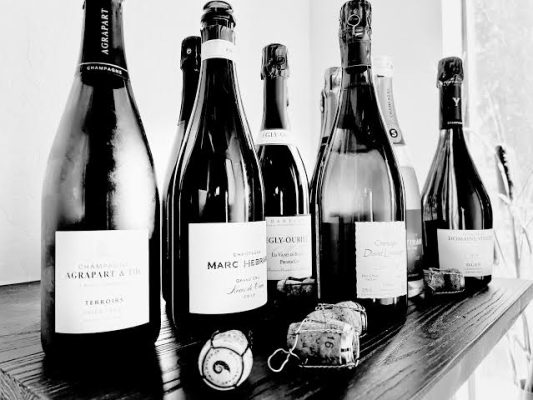
Jacques Selosse — the architect of modern grower Champagne philosophy. Operating from Avize in the Côte des Blancs, Anselme Selosse transformed what grower Champagne could be: oxidative, deeply mineral, biodynamically farmed, and so site-specific that no Maison could replicate a single bottle. His grower Champagne expressions have waiting lists measured in years. They are also the benchmark against which every serious grower Champagne producer measures themselves.
Egly-Ouriet — Pinot Noir specialist from Ambonnay, producing grower Champagne of extraordinary power and precision. The Vieilles Vignes expression, from old-vine Pinot Noir, is among the most coveted grower Champagne bottles outside Selosse’s range.
Ulysse Collin — the most compelling emerging name in grower Champagne. Olivier Collin’s Les Pierriéres Blanc de Blancs from Congy has become one of the most sought-after grower Champagne allocations in the entire region — a wine demonstrating what old-vine Chardonnay on chalk delivers in patient, obsessive hands.
Pierre Péters — five generations in Le Mesnil-sur-Oger, producing grower Champagne of collector-grade quality. The single-vineyard Les Chétillons is the most respected Grand Cru Blanc de Blancs from an RM producer outside the Selosse range.
Explore our Grower Champagne collection at Noir Cellars →
The Critical Difference in Production: What Separates Grower Champagne from Maison
Understanding the grower Champagne vs Maison production difference is the fastest way to understand why they taste so different.
Maison Champagne is built on reserve wines — wines from previous harvests deliberately held back and blended into each new release to create continuity across years. The leading Maisons are not trying to make one village louder than the rest. They are trying to compose harmony. Their non-vintage Brut is often the product of hundreds of components, with reserve wines providing continuity from one year to the next. The finest examples deliver a level of polish, precision, and consistency that smaller producers rarely match year after year. Champagne Club
Grower Champagne producers, by contrast, have limited reserve wine libraries — a structural consequence of small production volumes and limited cellar space. Grower Champagnes are often released younger than their large house counterparts due, in part, to the greater financial resources that would be needed for long-term ageing and storage. Many also show a lower dosage, and occasionally no dosage at all, than most Négociant-Manipulant bottlings. Wikipedia
This matters in the glass in specific, consistent ways:
Grower Champagne vs Maison in style: Grower Champagne tends to be more idiosyncratic, more vintage-variable, and more directly expressive of its terroir. Maison Champagne tends to be more consistent, more polished, and more immediately accessible across a wide range of palates.
Grower Champagne vs Maison in dosage: Grower Champagne producers typically use lower dosage — the sugar added at disgorgement — because their fruit quality allows it and their philosophy demands it. This produces grower Champagne that is drier, more mineral, and more wine-like in character than most non-vintage Maison expressions.
Grower Champagne vs Maison in ageing: The finest Maison prestige cuvées are built for decades of development. Grower Champagne expressions can also age magnificently — Selosse’s wines are best at 8–15 years from release — but the reserve wine depth and lees ageing infrastructure of the great houses gives Maison Champagne a structural advantage in the longest-term cellaring tier.
Grower Champagne vs Maison: The Honest Verdict on Value
For years, one of the strongest arguments in the grower Champagne vs Maison debate was straightforward: grower Champagne offered significantly better quality per pound because it lacked the marketing premiums of the famous houses. That case has weakened considerably — but it has not disappeared entirely.
One reason grower Champagne gained such a devoted following is value. For years, smaller estates offered exceptional quality at prices below the flagship bottlings of famous houses. That gap still exists in parts of the market, but it has narrowed. Demand for top growers has risen sharply, and scarcity now pushes some bottles into premium territory. Champagne Club
The grower Champagne vs Maison value landscape in 2025 looks like this:
Where grower Champagne offers the strongest value: Emerging producers in the Côte des Bar, Aube, and Vallée de la Marne who have not yet attracted widespread collector attention. Grower Champagne non-vintage expressions from respected producers whose vintage bottlings have become expensive. Any grower Champagne producer in their first decade of independent bottling — before the wine press catches up with the quality.
Where Maison Champagne offers the strongest value: The non-prestige tier of the great houses — Taittinger Brut Réserve NV, Billecart-Salmon Blanc de Blancs — consistently delivers prestige-adjacent quality at prices significantly below the prestige tier. These grower Champagne vs Maison comparisons at the $50–$100 price point consistently favour the Maisons for immediate accessibility and consistency.
For the grower Champagne vs Maison investment question specifically — where secondary market confidence matters most — the Maisons dominate. The houses to earn top confidence ratings among Wine Lister trade members were all Maisons. Grower Champagne investment is possible but requires specialist knowledge and a narrower secondary market.
For broader investment guidance, read our fine wine investment guide → and our vintage Champagne 2015 guide →.
When to Buy Grower Champagne vs Maison: The Definitive Occasion Guide
This is the framework the grower Champagne vs Maison debate has been building toward. Neither category is universally superior — the right choice depends entirely on what you need the Champagne to do.
Choose Maison Champagne When:
The label communicates the occasion. At a wedding, a corporate event, or any celebration where guests span every level of wine experience, the name on the bottle speaks immediately. The meaning of Dom Pérignon is understood without a tasting note. A great grower Champagne — however extraordinary — requires context that the moment may not allow. Explore our wedding Champagne guide → or browse our Champagne gift delivery service →.
Gifting is the purpose. A grower Champagne is a magnificent gift for a serious wine professional who will immediately understand what they have been given. For everyone else, Dom Pérignon, Armand de Brignac Brut Gold, or Krug Grande Cuvée communicates intention without explanation. Browse our complete Champagne gifts collection →.
Consistency year-on-year matters. Restaurant by-the-glass programmes, recurring corporate entertaining, or any scenario requiring identical style across repeated orders — the Maison model is structurally built for this. Grower Champagne is not.
The investment case is paramount. Maison Champagne — particularly Dom Pérignon, Krug, and Cristal — has the deepest secondary market liquidity, the strongest provenance documentation standards, and the most globally distributed collector base of any Champagne category.
Choose Grower Champagne When:
The wine is the conversation. At a dinner among serious wine enthusiasts where the bottle will be interrogated, discussed, and contextualised — grower Champagne generates engagement that even the finest Maison expressions rarely match. The specificity gives people something to react to. Explore grower Champagne expressions at Noir Cellars →
You want to understand what Champagne’s chalk actually tastes like. If you think you know what Champagne tastes like because you know the major Maison styles, a great grower Champagne Blanc de Blancs from the Grand Cru villages of the Côte des Blancs will revise that assessment completely. The grower Champagne vs Maison difference is most dramatically felt at this level — chalk minerality, unmediated by blending, is one of the most revelatory drinking experiences available to any serious wine enthusiast.
Cellar diversity is the goal. The finest cellars contain both grower Champagne and Maison expressions. Maisons provide depth, consistency, and investment confidence. Grower Champagne provides discovery, specificity, and the pleasure of wines nobody else at the table has encountered.
Value-focused buying at the connoisseur level. Despite the narrowing gap, grower Champagne still represents some of the best quality-to-price ratios available in any Champagne category — particularly in the emerging-producer tier. Browse our grower Champagne selection → alongside our full Champagne range → to compare both categories side by side.
How to Decode Any Champagne Label: The Complete Code Reference
The two-letter production code appears in small print on the base of every Champagne label. Here is the complete grower Champagne vs Maison reference:
| Code | Designation | What It Means |
|---|---|---|
| RM | Récoltant-Manipulant | True grower Champagne — estate-grown grapes, estate-made wine |
| NM | Négociant-Manipulant | Maison — purchases significant proportion of grapes from growers |
| CM | Coopérative-Manipulant | Cooperative producing Champagne collectively from member growers |
| RC | Récoltant-Coopérateur | Grower sends grapes to a cooperative and sells under their own label |
| SR | Société de Récoltants | Group of related growers sharing production facilities |
| MA | Marque Auxiliaire | Own-label Champagne produced for another party — restaurants, retailers |
| ND | Négociant-Distributeur | Merchant selling Champagne made by others under their own name |
The number following the code is the CIVC registration number — unique to each producer. Use it to research any grower Champagne producer before purchasing.
Frequently Asked Questions About Grower Champagne vs Maison
What is the main difference between grower Champagne and Maison Champagne? The grower Champagne vs Maison difference is rooted in grape sourcing and production philosophy. Grower Champagne (RM) is made by producers who grow their own grapes and make their wine from that estate fruit — typically from a single village or small cluster of parcels. Maison Champagne (NM) is made by houses that source grapes from across the Champagne region and blend them into a consistent house style. Out of more than 19,000 growers in Champagne, only around 5,000 produce grower Champagne under their own label. Maison Champagne accounts for approximately 85% of global exports. Grower Champagne accounts for the remaining 15%.
Is grower Champagne better than Maison Champagne? The grower Champagne vs Maison question is not about which is objectively better — it is about which is right for a specific purpose. The choice between grower Champagne and Maison Champagne is therefore not a matter of quality, but a difference in philosophy. Grower Champagne offers terroir specificity, artisanal craft, and the taste of a single place. Maison Champagne offers consistency, blending mastery, and immediate universal recognition. Both can be extraordinary. The finest cellars contain both.
Why is grower Champagne harder to find than Maison Champagne? Grower Champagne production volumes are tiny compared to the Maisons. Moët & Chandon produces approximately 30 million bottles annually. A respected grower Champagne producer might produce 15,000–50,000 bottles. Grower Champagne accounts for only 15% of Champagne exports and can be very difficult to find outside France without a specialist retailer. Browse our available grower Champagne expressions →.
What does RM mean on a Champagne label? RM — Récoltant-Manipulant — is the official CIVC designation for grower Champagne producers who cultivate their own vineyards and produce Champagne under their own label from that estate fruit. It is the code that identifies authentic grower Champagne and appears in small print on every Champagne label alongside the producer’s registration number.
Which grower Champagne producers should every serious drinker know? The most critically revered grower Champagne producers include Jacques Selosse (Avize), Egly-Ouriet (Ambonnay), Ulysse Collin (Congy), Pierre Péters (Le Mesnil-sur-Oger), and Vilmart & Cie (Rilly-la-Montagne). Among these, Jacques Selosse is the only grower Champagne producer to appear at the top two confidence rating tiers in Wine Lister’s trade survey — alongside the great Maisons. Explore available grower Champagne expressions at Noir Cellars →.
Is grower Champagne a good investment compared to Maison Champagne? For investment purposes, Maison Champagne — particularly Dom Pérignon, Krug, and Louis Roederer Cristal — offers superior secondary market liquidity, stronger global buyer recognition, and more established provenance documentation standards than grower Champagne. Top grower expressions like Jacques Selosse do trade actively on the secondary market, but the buyer pool is narrower and the market less liquid. Read our Champagne and fine wine investment guide → for detailed portfolio guidance.
Where can I buy both grower Champagne and Maison Champagne online? Noir Cellars stocks the full spectrum — from Dom Pérignon, Krug, and Cristal at the Maison prestige tier, to Jacques Selosse and Egly-Ouriet grower Champagne expressions, all with temperature-controlled storage and insured worldwide delivery. Visit noircellars.com/champagne → or contact our concierge team at concierge@noircellars.com to discuss availability on specific grower Champagne expressions. For gifting, visit our Champagne gift delivery guide → or browse our gifts collection →.
Whether your cellar leans toward the great Maisons or the most sought-after grower Champagne producers — or both — Noir Cellars stocks the complete range with temperature-controlled storage and insured delivery worldwide. Visit noircellars.com/champagne or speak with our concierge at concierge@noircellars.com.